

The Rowing merit badge is a great way for Scouts to learn about rowing and water safety. It teaches important skills that help you enjoy the water while staying safe. Rowing is a fun activity, and this merit badge helps you become more confident on the water. Whether you’ve rowed before or it’s your first time, you can learn a lot.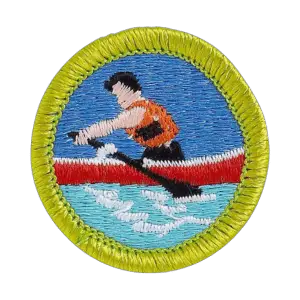
When you work on the Rowing merit badge, you learn how to handle a boat and work as part of a team. Rowing takes practice and cooperation. You’ll get better at using your strength and coordination to move the boat. This merit badge helps you build these skills step by step.
The Rowing merit badge also focuses on safety. You’ll learn what to do in emergencies and how to stay calm and act quickly. You’ll practice skills like rescuing someone from the water. These safety lessons are important for anyone who spends time on the water.
Scouts who earn the Rowing merit badge gain confidence and learn to trust their abilities. You’ll grow as a leader and as a teammate. These skills are not only useful in rowing but also in other parts of your life. The Rowing merit badge is a fun and rewarding way to challenge yourself.
Find specific helps for some of the Rowing merit badge requirements listed below. Some of these resources will just give the answers. Others will provide engaging ways for older Scouts to introduce these concepts to new Scouts.
Do the following:
When working on the Rowing merit badge, it’s important to understand the hazards you might face while rowing. Knowing what to watch for and how to respond can keep you and your crew safe. Most hazards fall into two main categories: weather-related and water-related.
Weather-Related Hazards
Weather can change quickly when you’re on the water. Strong winds can make rowing harder and create waves that may tip the boat. Thunderstorms are dangerous because lightning can strike people or boats on open water. To stay safe:
Water-Related Hazards
Water hazards can include rough currents, debris in the water, and cold temperatures. Cold water is especially dangerous because it can cause hypothermia, which happens when your body loses heat too quickly. To prevent water-related hazards:
How to Respond to Hazards
If something does go wrong:
By learning to recognize and handle these hazards, you’ll be prepared to enjoy rowing safely. This knowledge is an important part of earning the Rowing merit badge and becoming a responsible boater.
When working on the Rowing merit badge, you’ll learn how to stay safe and handle common injuries or illnesses. Rowing can be fun and rewarding, but it’s important to know how to prevent and treat issues like blisters, hypothermia, heat-related illnesses, dehydration, sunburn, sprains, and strains. Here’s what you need to know.
Blisters
Hypothermia
Heat-Related Illnesses (Heat Exhaustion and Heat Stroke)
Dehydration
Sunburn
Sprains and Strains
By understanding these risks and how to address them, you’ll be better prepared for safe rowing. This knowledge is an important part of the Rowing merit badge and will help you enjoy your time on the water.

The BSA Safety Afloat policy is a set of rules to help Scouts stay safe during boating activities like rowing. It applies to all water activities in Scouting and teaches how to prevent accidents. Learning and following these rules is an important part of earning the Rowing merit badge.
The main points are summarized below. Read more about Safety Afloat here.
The 9 Points of Safety Afloat
Here are the key parts of Safety Afloat and how they apply to rowing:
How It Applies to Rowing
When you’re rowing, the Safety Afloat rules help prevent accidents and prepare you for emergencies. For example, wearing a life jacket ensures you stay safe if you fall out of the boat. Learning rowing skills and practicing rescues helps you handle the boat and assist others. Using the buddy system makes sure no one is left alone in an emergency.
Safety Afloat is not just about following rules. It’s about building habits that protect you and others. Understanding these rules is a key part of the Rowing merit badge and helps you enjoy rowing safely while being prepared for anything.
Before completing requirements 4, 5, 6, and 7, successfully complete the BSA swimmer test.

Before completing some of the Rowing merit badge requirements, you must pass the BSA swimmer test. This test shows that you are comfortable and capable in the water, which is important for your safety during rowing activities.
Learn more about swim tests here.
What Is the BSA Swimmer Test? The swimmer test has three main parts:
The entire test must be completed without stopping. It proves that you can swim a good distance, stay afloat, and stay calm in the water.
Why Is This Test Important for Rowing?
Rowing involves being on the water, where accidents like falling out of the boat can happen. By passing the swimmer test, you show that you can handle yourself in deep water. This is a critical safety skill. For the Rowing merit badge, understanding and practicing water safety is just as important as learning how to row.
How to Prepare for the Test
Completing the swimmer test is an important milestone for the Rowing merit badge. It helps make sure you are ready to safely enjoy rowing activities while learning new skills.
Review the characteristics of life jackets most appropriate for rowing and why one must always be worn while rowing. Then demonstrate how to select and fit a life jacket.
Wearing a life jacket is essential for rowing. A life jacket, also called a Personal Flotation Device (PFD), helps keep you afloat if you fall into the water. For the Rowing merit badge, you need to understand how to choose, fit, and use a life jacket correctly.
Characteristics of Life Jackets for Rowing
The best life jackets for rowing are U.S. Coast Guard-approved and designed for boating activities. Here’s what to look for:
Why You Must Always Wear a Life Jacket
Accidents on the water can happen quickly. A life jacket keeps you afloat, even if you’re injured, tired, or caught off guard. Rowing activities often take place on moving or deep water, where swimming alone might not be enough. Wearing a life jacket gives you extra protection and helps rescuers find you more easily if needed.
How to Select and Fit a Life Jacket
Knowing how to choose and wear a life jacket is a key part of the Rowing merit badge. It ensures you can stay safe and focus on enjoying your time on the water.
Do ONE of the following:
When earning the Rowing merit badge, you’ll practice key rowing skills like steering, turning, and mooring your craft. These exercises help you develop control of the boat and learn how to secure it properly when you finish. You’ll also practice tying important knots used in rowing and boating.
Rowing in a Straight Line and Turning
Rowing in a straight line for 100 yards tests your ability to use even strokes and keep the boat steady. After stopping, you’ll pivot the boat to turn it around and row back to the starting point. Pivoting involves turning the boat in place by pulling harder on one oar or rowing with only one side. You’ll also practice rowing backward (called backwatering) in a straight line for 25 yards, making a turn while rowing, and returning to the starting point. These skills are important for navigating safely and efficiently on the water.
Landing and Mooring Your Craft
Landing the boat involves bringing it close to the shore or dock while keeping it steady. Mooring means tying the boat securely so it doesn’t drift away. You’ll learn how to properly land, moor, or place the boat on a rack. This is an important skill to protect the boat and keep it safe when not in use.
Tying Mooring Knots
Knots are essential for securing your boat. You’ll practice these five knots for the Rowing merit badge:
Why These Skills Matter
Learning these skills for the Rowing merit badge helps you handle a boat with confidence and care. Being able to row straight, turn, and land safely makes you a better boater. Tying knots and mooring properly ensures your boat stays secure and avoids damage. These practical skills are valuable for all boating activities.
For the Rowing merit badge, you’ll experience what it’s like to row as part of a team in a competitive meet. This requirement helps you practice teamwork, communication, and rowing skills in a real-world setting. The meet must include at least two teams with different sponsors, such as schools, clubs, or Scout units.
Understanding Competitive Rowing
Competitive rowing involves racing against other teams on a set course, usually in straight lines or around markers. Teams work together to row in sync, which means each person matches their strokes to move the boat smoothly and quickly. A coxswain (if used) is a team member who steers the boat and gives instructions.
Before the competition, you’ll practice rowing as a team for at least 10 hours. Team practice is important because it helps you:
The Importance of Teamwork in Rowing
Rowing as part of a team is different from rowing solo. Everyone in the boat must row together at the same pace for the boat to move efficiently. If one rower is out of sync, it can slow the boat down or make it harder to steer. During practice, you’ll learn how to match your stroke to your teammates’ rhythm and how to listen to instructions from your team leader or coxswain.
Why This Requirement Matters
Participating in a rowing meet helps you understand the value of teamwork and preparation. Rowing with a team builds your strength, coordination, and ability to work with others. It also gives you a chance to test your rowing skills in a fun and challenging way. This experience is an important step in earning the Rowing merit badge and will give you memories of working toward a common goal with your team.
Do ONE of the following:
This Rowing merit badge requirement teaches you how to safely manage a boat with a passenger and practice an advanced rowing technique called sculling. These skills are important for safely sharing a rowboat and improving your control on the water.
Helping a Passenger Safely
Coming alongside a pier requires careful rowing to avoid hitting the dock too hard. You’ll learn to approach slowly and use gentle strokes to stop the boat in the right position. Helping a passenger into the boat means ensuring they step carefully and the boat stays steady. Stability is key—hold the boat firmly at the pier while your passenger enters.
When pulling away, row with smooth strokes to create a safe distance from the dock. Switching positions in the boat requires coordination. One person should move at a time, keeping their weight low to avoid tipping the boat.
Sculling Over the Stern or Side
Sculling is a rowing technique where you use one oar to propel and steer the boat. It’s done by moving the oar in a figure-eight motion while keeping it in the water. Sculling over the stern means the oar is positioned at the back of the boat, while sculling over the side means it’s used along the side. This skill is useful for maneuvering in tight spaces or when you need to move the boat without using both oars.
Returning to the Pier
After practicing sculling, you’ll resume your regular rowing position and row back to the pier. When helping your passenger out of the boat, steady the boat again to keep it from rocking. Make sure they exit slowly and safely onto the dock.
Why These Skills Matter
This part of the Rowing merit badge helps you become a safer and more confident boater. Safely managing passengers ensures everyone enjoys the activity without accidents. Sculling is a valuable technique that shows you how to control the boat in different ways. These skills make you a better rower and prepare you for more advanced boating activities.
This Rowing merit badge requirement teaches you how to safely get in and out of a sliding-seat rowboat at a pier. Sliding-seat rowboats are often used in competitive rowing. They have movable seats that slide back and forth on rails to help rowers use their legs for more powerful strokes. This feature makes the boat more efficient but also requires extra care to maintain balance.
Approaching the Pier
To begin, row the boat steadily and approach the pier slowly. Use short, controlled strokes to bring the boat alongside the dock without bumping it too hard. Once the boat is in position, hold onto the dock or use a dock line to keep the boat stable while transferring.
Exiting the Boat Safely
When it’s your turn to get out, your buddy should assist by holding the boat steady to prevent it from rocking. Keep your movements slow and controlled. Stay low as you step out of the boat onto the pier to maintain balance. Avoid standing up fully while still in the boat, as this could cause it to tip.
Helping Your Buddy
Once you are safely on the pier, it’s your turn to assist your buddy. Hold the boat firmly against the dock to make it easier for them to get in. Ensure they also move slowly and stay low as they step into the boat.
Reversing Roles
Repeat the process with your buddy exiting the boat and you re-entering. Practicing both roles ensures you’re comfortable helping others and maintaining your own safety during transfers.
Why These Skills Matter
Learning how to transfer safely in a sliding-seat rowboat helps you handle the unique balance challenges of this type of craft. It also teaches teamwork and communication, as you rely on your buddy to assist during the process. These skills are important for the Rowing merit badge and for staying safe during any boating activity.
Participate in a swamped boat drill including righting and stabilizing the craft, reboarding in deep water, and making headway. Tell why you should stay with a swamped boat.
Alone in a rowboat, push off from the shore or a pier. Row 20 yards to a swimmer. While giving instructions to the swimmer, pivot the boat so that the swimmer can hold on to the stern. Tow the swimmer to shore.
As part of the Rowing merit badge, you’ll practice what to do if your boat becomes swamped, or filled with water, while on the water. This drill teaches you how to stay safe, right and stabilize the boat, and reboard in deep water. Knowing how to handle a swamped boat is a critical skill for rowers.
Why Stay With a Swamped Boat?
If your boat swamps, it’s safer to stay with it rather than trying to swim to shore. A swamped boat can still float and provides something to hold onto while waiting for rescue. It’s also easier for rescuers to see a large boat than a swimmer in the water. Leaving the boat puts you at greater risk of exhaustion or hypothermia, especially in cold water.
Righting and Stabilizing the Boat
If the boat capsizes (flips over), you’ll need to right it. To do this:
If the boat is swamped but hasn’t capsized, focus on keeping it steady to prevent further tipping. Hold onto the sides and keep your movements slow and controlled.
Reboarding in Deep Water
Climbing back into the boat can be tricky, especially in deep water. To reboard:
Making Headway
Even when swamped, you can still row the boat to safety or stay in one place until help arrives. Use slow, deliberate strokes to avoid splashing more water into the boat. Focus on staying balanced and moving steadily.
Why This Drill Is Important
Practicing a swamped boat drill for the Rowing merit badge prepares you for real-life emergencies. You learn how to stay calm, work as a team, and use your skills to stay safe. By staying with the boat and following these steps, you can protect yourself and others until help arrives or you reach safety.
Describe the following:
Rowing is a versatile activity, and different types of boats are used for various purposes, such as commercial work, competitive sports, and recreational fun. Learning about these types of craft is an important part of the Rowing merit badge. Each type of boat is designed to suit specific needs and conditions.
Commercial Rowing Craft
Commercial rowing boats are used for work and transportation. These boats are built for stability and carrying heavy loads. Examples include:
Competitive Rowing Craft
Competitive rowing boats, or shells, are long, narrow, and lightweight to maximize speed. These boats require skill to balance and row effectively. Types of shells include:
Recreational Rowing Craft
Recreational rowing boats are designed for fun and easy use. They are stable and don’t require as much experience to row. Examples include:
Why These Boats Matter for the Rowing Merit Badge
Understanding the different types of rowing boats helps you choose the right craft for your activity. For example, a recreational rowboat is perfect for learning basic skills, while a shell is ideal for competitive rowing. Knowing these differences will enhance your appreciation of rowing and prepare you for future adventures on the water.
Rowing boats are made from different materials, each with its own strengths and weaknesses. For the Rowing merit badge, you’ll learn about four common boatbuilding materials: wood, fiberglass, aluminum, and composite materials. Understanding these materials helps you appreciate how boats are designed and built.
Wood
Wood is a traditional material used in boatbuilding for centuries.
Fiberglass
Fiberglass is a lightweight material made from glass fibers and resin.
Aluminum
Aluminum is a metal often used in small boats.
Composite Materials
Composites like carbon fiber and Kevlar are used in high-performance rowing shells.
Why These Materials Matter for the Rowing Merit Badge
Each material serves a different purpose, depending on the type of rowing. For example, wooden rowboats are great for recreation, while composite shells are best for racing. Understanding these materials helps you choose the right boat and care for it properly. It’s also a reminder of the craftsmanship and technology behind the rowing experience.
Oarlocks are devices that hold the oars in place on a rowboat. They let the oars pivot so you can row smoothly and efficiently. For the Rowing merit badge, you’ll learn about the different types of oarlocks used in competitive and recreational rowing. Each type is designed to meet specific needs based on the activity.
Open Oarlocks
Open oarlocks, sometimes called “horned oarlocks,” have a U-shape design. The oar rests in the open part of the U.
Closed Oarlocks
Closed oarlocks have a circular or semi-circular shape that wraps around the oar.
Swivel Oarlocks
Swivel oarlocks are commonly used in competitive rowing shells. They have a pivoting mechanism to hold the oar securely.
Pin-and-Clip Oarlocks
This type uses a pin to hold the oar and a clip to lock it in place. It’s common in competitive rowing where stability is critical.
Why Oarlocks Matter for the Rowing Merit Badge
Oarlocks are essential for effective and safe rowing. They help you control the oar and keep your strokes smooth. For recreational rowing, simpler oarlocks like open or closed designs are practical and easy to use. In competitive rowing, swivel or pin-and-clip oarlocks provide the stability and precision needed for racing. Learning about oarlocks helps you understand how rowing equipment is designed to match different needs and activities.
Discuss the following:
Feathering oars is a technique used in rowing to make your strokes more efficient. When you feather an oar, you turn the blade (the flat part of the oar) parallel to the water after completing a stroke. This technique is especially useful in windy conditions or during competitive rowing. For the Rowing merit badge, learning to feather your oars helps improve your rowing skills and efficiency.
What Is Feathering?
Feathering involves twisting the oar handle at the end of the power stroke, which turns the blade from a vertical position to a horizontal position. After feathering, the blade glides over the water with less resistance during the recovery phase (the part of the stroke when you’re bringing the oar back for the next stroke).
Advantages of Feathering Oars
How to Feather Oars
To feather your oars, you need to learn how to rotate the oar handle with your wrists:
Why Feathering Is Important for the Rowing Merit Badge
Feathering oars shows that you have advanced control of the oars and understand how to row more effectively. This skill is valuable for both recreational and competitive rowing. By practicing feathering, you’ll row with less effort, maintain a smoother rhythm, and adapt to challenging conditions like wind. Mastering this technique is an important step in earning the Rowing merit badge and becoming a skilled rower.
Rowing in rough water or during a windstorm can be dangerous if you’re not prepared. For the Rowing merit badge, you need to understand the risks and learn boat-handling procedures to stay safe in these conditions. Strong winds and heavy waves can make rowing difficult, increase the chance of capsizing, and make it harder to control your boat.
Precautions Before Heading Out
To avoid problems in rough water, follow these precautions:
Boat-Handling Procedures in Rough Water
If you encounter rough water or strong winds, use these strategies to stay safe:
What to Do in a Windstorm
If you’re caught in a windstorm:
Why This Knowledge Is Important for the Rowing Merit Badge
Learning how to handle rough water and strong winds is an essential safety skill for rowers. These precautions and techniques help you stay calm and act effectively in difficult conditions. Understanding these boat-handling procedures is a key part of earning the Rowing merit badge and becoming a responsible and confident rower.
Taking care of a boat is an important skill for rowers. For the Rowing merit badge, you’ll learn how to fit out and maintain a boat during the rowing season and prepare it for storage during the winter. Proper care helps your boat last longer, perform better, and stay safe to use.
Fitting Out and Maintaining a Boat in Season
“Fitting out” means getting the boat ready for use at the start of the season. To do this:
Preparing and Storing a Boat for Winter
At the end of the season, you’ll need to prepare the boat for winter storage to protect it from cold weather and damage. Steps include:
Why Boat Care Matters for the Rowing Merit Badge
Proper boat care ensures safety, reliability, and performance. Regular maintenance during the season prevents small problems from becoming bigger ones. Winter preparation protects the boat from harsh conditions, extending its lifespan. These skills are valuable for anyone who rows, and mastering them is an important step in earning the Rowing merit badge.
The length of your oars is an important factor in rowing efficiently and comfortably. Oars that are too long or too short can make rowing more difficult and reduce your control over the boat. For the Rowing merit badge, you’ll learn how to determine the proper oar length based on the type of boat and rowing style.
Factors That Affect Oar Length
Several factors help determine the right length for your oars:
General Guidelines for Oar Length
A common method to estimate oar length is this formula:
Why Oar Length Matters
Using the proper length of oars ensures:
Why This Knowledge Is Important for the Rowing Merit Badge
Understanding how to choose the correct oar length shows you’re serious about improving your rowing skills. It also ensures you can row effectively in different types of boats. Learning this skill is an important part of the Rowing merit badge and helps you enjoy rowing safely and efficiently.
Rowing can be done using either fixed-seat or sliding-seat techniques. Each style has unique features, and understanding the differences is an important part of the Rowing merit badge. The type of seat affects how you use your body to row and the type of boat you’ll use.
Fixed-Seat Rowing
In fixed-seat rowing, the seat is stationary and does not move.
Sliding-Seat Rowing
In sliding-seat rowing, the seat moves back and forth on rails.
Why These Differences Matter for the Rowing Merit Badge
Understanding the differences between fixed-seat and sliding-seat rowing helps you choose the right type for your activity. Fixed-seat rowing is great for recreational or casual use, while sliding-seat rowing is ideal for racing and longer distances. Learning both techniques during the Rowing merit badge improves your overall rowing ability and prepares you for different types of boating adventures.
The term sculling has different meanings depending on whether you’re rowing in a fixed-seat or sliding-seat boat. Learning these meanings is part of the Rowing merit badge and helps you understand how this versatile technique is used in different situations.
Sculling in Fixed-Seat Rowing
In fixed-seat rowing, sculling refers to using one oar to propel and steer the boat.
Sculling in Sliding-Seat Rowing
In sliding-seat rowing, sculling refers to a style of rowing where the rower uses two oars, one in each hand.
Why These Definitions Are Important for the Rowing Merit Badge
Understanding the two meanings of sculling shows how rowing techniques vary based on equipment and purpose. Fixed-seat sculling teaches you how to maneuver in small spaces, while sliding-seat sculling focuses on speed and coordination. Learning both types of sculling during the Rowing merit badge helps you become a more versatile and skilled rower.
Rowing is an excellent form of exercise that benefits both your body and mind. Whether done on the water or on a rowing machine, it’s a full-body workout that improves strength, endurance, and overall fitness. For the Rowing merit badge, understanding these health benefits shows how rowing can contribute to a healthy lifestyle.
Full-Body Workout
Rowing uses many muscle groups at once. It strengthens your legs, core, back, arms, and shoulders. Each stroke involves pushing with your legs, pulling with your arms, and engaging your core for stability. This combination makes rowing one of the best exercises for building balanced muscle strength.
Cardiovascular Health
Rowing is an aerobic exercise, meaning it increases your heart rate and improves your heart and lung function. Regular rowing can lower the risk of heart disease, improve circulation, and help maintain a healthy weight. It also boosts stamina, making other activities easier.
Low-Impact Exercise
Unlike running or jumping, rowing is low-impact. This means it’s gentle on your joints, making it a good choice for people of all fitness levels, including those recovering from injuries. The smooth, repetitive motion is effective without putting too much stress on your knees or ankles.
Mental Health Benefits
Rowing isn’t just good for your body—it’s great for your mind too. Being on the water can be calming, and the rhythmic motion of rowing helps reduce stress. For competitive rowers, the focus required during practice or races can build discipline and mental toughness.
Why These Benefits Matter for the Rowing Merit Badge
Learning about the health benefits of rowing helps you see it as more than just a recreational activity. It’s a way to stay fit, improve your endurance, and boost your overall well-being. These benefits are a key reason why rowing is such a valuable skill and an important part of earning the Rowing merit badge.
To complete the requirements for the National Outdoor Award Aquatics Segment, a Scout or Venturer must be a proficient swimmer, have some lifesaving skills, complete the mile swim, and spend some time enjoying aquatics adventures such as swimming, paddling, fishing, or scuba diving.
To complete the requirements for the National Outdoor Award Adventure Segment, a Scout or Venturer must learn to be prepared during outdoor adventures. He or she must also complete a challenging backpacking, paddling, sailing, climbing, or other high-adventure activity. See the specifics , along with some related helps and awards.

You can learn about sports, crafts, science, trades, business, and future careers as you earn merit badges. There are more than 100 merit badges. Any Scout may earn any merit badge at any time. You don’t need to have had rank advancement to be eligible. Merit badges cover a wide variety of topics: Outdoor Skills and Adventure, , Science and Nature, Health and Safety, Skills, Trades, and Careers, Information Technology and Communication, Business, Education, and Entrepreneurship, History and Culture, Fine Arts and Crafts, Hobbies and Interests. Talk to your Scoutmaster to learn more.

Scouts BSA, formerly known as Boy Scouts, is a Scouting America program for youth aged 11 through 17. It aims to prepare young people to make ethical and moral choices over their lifetimes by instilling in them the values of the Scout Oath and Law. The program offers a unique mix of adventure, leadership development, and service to others, fostering a sense of community and personal growth.
Members participate in a wide range of outdoor activities, such as camping, hiking, and backpacking, which are integral to the program’s emphasis on character development, citizenship, and physical fitness. Scouts BSA is structured around a patrol system, promoting teamwork and leadership through peer-led activities and decision-making processes. Through advancement opportunities, Scouts are encouraged to learn various skills, earn merit badges, and progress through ranks, culminating in the prestigious Eagle Scout rank.
Scouts BSA is committed to inclusivity, welcoming members from diverse backgrounds and beliefs. The program is designed to be adaptable, supporting Scouts in achieving their full potential, whether through high adventure experiences, community service projects, or personal growth initiatives. By participating in Scouts BSA, youth gain confidence, resilience, and skills that benefit them throughout their lives.
What do I need to know before starting the Rowing merit badge?
Before starting, you should know how to swim and pass the BSA swimmer test. You’ll also learn safety rules and basic rowing techniques during the badge.
Do I need my own rowboat to earn the Rowing merit badge?
No, you don’t need to own a rowboat. Your troop, camp, or a local organization will usually provide the boats and equipment you need to practice.
What is the BSA swimmer test, and why is it required for the Rowing merit badge?
The BSA swimmer test checks your swimming skills to ensure you can handle being in deep water. It’s required for safety because rowing activities are done on the water.
What types of boats will I use for the Rowing merit badge?
You’ll use both fixed-seat rowboats and sliding-seat rowboats. Fixed-seat boats are stable and good for beginners. Sliding-seat boats are often used for competitive rowing and allow more powerful strokes.
What safety skills will I learn for the Rowing merit badge?
You’ll learn how to handle emergencies, such as rescuing someone who falls overboard, righting a swamped boat, and using a life jacket correctly. Safety is a big part of this badge.
Do I need to participate in a competition to earn the Rowing merit badge?
Yes, one requirement involves rowing as part of a team in a competitive meet. This helps you practice teamwork and real-world rowing skills.
Why is learning knots important for the Rowing merit badge?
Knot-tying is essential for mooring and securing the boat. You’ll learn knots like the clove hitch, bowline, and mooring hitch to safely tie the boat to docks or other structures.
What are the health benefits of rowing?
Rowing builds muscle strength, improves heart and lung health, and is low-impact, which makes it easy on your joints. It’s a great full-body workout and can also help reduce stress.
Is rowing hard to learn?
Rowing takes practice, but the Rowing merit badge teaches you step by step. You’ll start with basic strokes and safety, and then build more advanced skills like sculling and teamwork.
What do I need to do to prepare a boat for winter?
You’ll learn how to clean, inspect, and protect the boat before storing it. Proper winter preparation helps the boat last longer and stay in good condition for the next season.
The Rowing merit badge teaches Scouts the skills needed to handle a rowboat safely and effectively. You’ll learn everything from basic rowing techniques to advanced skills like sculling and pivoting. Along the way, you’ll build confidence and improve your teamwork. Whether you’ve rowed before or are trying it for the first time, this badge is a great way to enjoy time on the water.
Safety is a big part of the Rowing merit badge. You’ll practice using life jackets, rescuing someone who falls overboard, and handling emergencies like a swamped boat. These skills help keep you and your teammates safe during rowing activities.
The badge also focuses on the care of boats. You’ll learn how to inspect, maintain, and store a boat to keep it in good condition. Knots are another important part of the badge. You’ll master knots like the bowline and clove hitch, which are used for mooring and securing the boat.
Finally, the Rowing merit badge gives you the chance to participate in a rowing competition. This requirement lets you practice teamwork and test your skills in a fun and exciting way. By the end, you’ll be a skilled rower ready for many water adventures.
JL VETERAN 37 MALANG