


The Railroading merit badge is a great way for Scouts to learn about trains and how they work. Trains have been an important part of transportation for a long time. They move people and goods across the country. By earning the Railroading merit badge, Scouts discover how railroads operate and why they are important.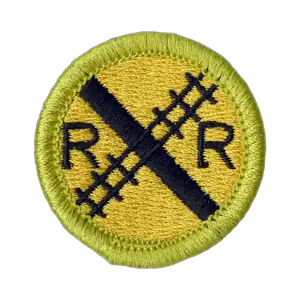
Scouts who work on the Railroading merit badge learn about different types of trains and how they are powered. They explore railroad safety and how tracks and signals help trains run smoothly. Some Scouts may even get a chance to visit a railroad station or see a train up close. These experiences help them understand the railroad industry better.
The Railroading merit badge is a good choice for Scouts who like machines, history, or transportation. It can also help Scouts develop problem-solving skills by learning how railroads handle challenges like scheduling and safety. Some Scouts might even become interested in railroad jobs in the future.
Working on the Railroading merit badge is fun and educational. Scouts get to explore a topic that affects everyday life but is often overlooked. Learning about railroads can give Scouts a new appreciation for trains and how they help people and businesses.
Find specific helps for some of the Railroading merit badge requirements listed below. Some of these resources will just give the answers. Others will provide engaging ways for older Scouts to introduce these concepts to new Scouts.
Do THREE of the following:
Scouts working on the Railroading merit badge learn about different types of freight trains. Modern freight trains carry many kinds of goods, helping businesses and people get what they need. Some common types include:
One important concept in the Railroading merit badge is the difference between unit trains and mixed freight trains. A unit train carries only one type of cargo, such as coal, oil, or grain. A mixed freight train hauls many different types of goods in different kinds of railcars.
Unit trains are more efficient than mixed freight trains because they carry the same cargo from one place to another without stopping to switch cars. This saves time and money. Mixed freight trains, on the other hand, must stop at different locations to drop off and pick up goods, which takes longer. Railroads use unit trains whenever possible to move goods quickly and keep costs low.
Scouts working on the Railroading merit badge learn about different railroads that move goods and people across the country. In the U.S., Class I railroads are the largest and busiest freight railroads. Regional railroads are smaller but still play an important role in moving goods.
Some major Class I railroads include:
Regional railroads are smaller but still important. One example is Florida East Coast Railway (FEC), which moves goods between Jacksonville and Miami. Another is Kansas City Southern (KCS), which operates in the U.S. and Mexico, carrying auto parts, grain, and fuel.
Railroads have crew change points, where train crews switch shifts. These are located about every 150 to 200 miles along major routes. Large service facilities are used to maintain and repair locomotives and railcars.
Learning about Class I and regional railroads helps Scouts understand how trains connect cities and industries. The Railroading merit badge gives Scouts a chance to explore how railroads keep goods moving every day.
Scouts working on the Railroading merit badge learn about different types of railroad cars. Railroads use special freight and passenger cars to move goods and people safely and efficiently.
Freight Cars:
Passenger Cars:
Each type of railcar is designed for a specific purpose. Freight cars move goods safely, while passenger cars make travel more comfortable. Learning about these different railcars helps Scouts understand how railroads serve both businesses and people. The Railroading merit badge gives Scouts a chance to explore the important role of trains in transportation.
Scouts working on the Railroading merit badge learn how modern locomotives develop power. Today, most trains use diesel-electric locomotives or electric locomotives to move heavy loads efficiently.
A diesel-electric locomotive has a diesel engine that does not directly turn the wheels. Instead, it powers a generator, which produces electricity. This electricity runs traction motors, which turn the wheels. This system is more efficient than using just a diesel engine because it provides better power control and less wear on parts.
An electric locomotive does not use diesel fuel. Instead, it gets electricity from an overhead wire or a third rail. The electricity goes directly to traction motors that drive the wheels. These locomotives are used in areas with high-speed passenger trains or busy freight lines because they produce no emissions and have strong pulling power.
Modern locomotives also have special features to improve performance. One of these is dynamic braking. Instead of using regular brakes to slow down, the traction motors switch to generator mode, turning the train’s speed into electrical energy. This energy is then released as heat through cooling fans. Dynamic braking helps reduce wear on regular brakes and improves control on downhill tracks.
Another important feature is radial steering trucks. On a locomotive, a truck is the wheel assembly under the train. Traditional trucks keep the wheels in a fixed position, which can cause friction and wear on curves. Radial steering trucks allow the wheels to adjust to the curve, making the train move more smoothly. This reduces damage to tracks and improves fuel efficiency.
By learning about how modern locomotives work, Scouts gain a better understanding of railroad technology. The Railroading merit badge helps Scouts explore the power and innovation behind today’s trains.
Do the following:
Scouts working on the Railroading merit badge learn about Amtrak, the national passenger train service in the United States. Amtrak was created to keep passenger trains running when private railroads could no longer afford to operate them.
Before Amtrak, most railroads in the U.S. carried both freight and passengers. However, by the 1960s, more people were traveling by car and airplane. Railroads lost money on passenger service and wanted to focus on moving freight. To save passenger trains, Congress created Amtrak in 1971 as a government-supported company. It took over most long-distance and intercity passenger routes.
Amtrak trains run on tracks owned by freight railroads but have priority over freight trains in most cases. Amtrak serves major cities like New York, Chicago, Los Angeles, and Washington, D.C. Some of its busiest routes include the Northeast Corridor, which connects Boston, New York, and Washington, and the California Zephyr, which runs from Chicago to San Francisco.
Amtrak provides an alternative to driving and flying, offering comfortable seats, dining cars, and even sleeping accommodations on long trips. By studying Amtrak, Scouts working on the Railroading merit badge learn how passenger rail service continues to be an important part of transportation in the U.S.
Scouts working on the Railroading merit badge can plan an exciting train trip between two major cities over 500 miles apart. An example of such a journey is from Chicago, Illinois, to New York City, New York, covering approximately 959 miles. Amtrak offers two primary routes for this trip: the Lake Shore Limited and the Cardinal.
Lake Shore Limited (Train Numbers 48/49):
Cardinal (Train Numbers 50/51):
Choosing Your Service:
Booking and Planning:
By planning this rail journey, Scouts fulfill a key requirement of the Railroading merit badge, gaining practical experience in understanding train schedules and services. This trip not only meets the distance criteria but also offers a memorable travel experience between two iconic American cities.
Scouts working on the Railroading merit badge learn about different types of rail-based public transportation. These systems help people travel quickly and efficiently in cities and across regions.
Types of Rail Transit:
Rail transit reduces traffic, lowers pollution, and helps people get to work, school, and other destinations. Learning about these systems helps Scouts understand how trains improve daily life. The Railroading merit badge teaches Scouts how rail transportation plays an important role in modern cities.
Do ONE of the following:
Scouts working on the Railroading merit badge learn how railroad companies are organized. A typical railroad has several major departments, each with an important job.
Each department plays a role in keeping the railroad running. By learning about these departments, Scouts gain a better understanding of how railroads operate. The Railroading merit badge helps Scouts explore the teamwork and planning needed to move freight and passengers safely.
Scouts working on the Railroading merit badge learn about many career opportunities in the railroad industry. Railroading offers jobs in engineering, operations, safety, and even technology. One of the most exciting careers is being a locomotive engineer. Engineers operate trains, control speed, and follow signals to move freight or passengers safely. This job requires training and skill, but it can be a rewarding career for someone who enjoys working with machines and traveling.
Another interesting job is a railroad dispatcher. Dispatchers direct train traffic and make sure trains run on schedule. They communicate with train crews and use advanced computer systems to prevent delays and accidents. This job is important for keeping railroads running smoothly.
Some people might be interested in railroad maintenance and construction. Workers in this field repair tracks, signals, and bridges. Without them, trains could not run safely. This job is great for those who like working outdoors and using heavy equipment.
Railroads also need mechanics and technicians to repair locomotives and railcars. These workers inspect engines, fix brakes, and make sure trains are safe to operate. With new technologies being used in trains, this field is always changing and improving.
By earning the Railroading merit badge, Scouts explore these careers and learn how railroads keep the world moving. Whether working on trains, tracks, or technology, railroading offers many exciting opportunities for the future.
Scouts working on the Railroading merit badge learn that railroads rely on many support industries to keep trains moving. These industries provide equipment, technology, and services that help railroads operate safely and efficiently.
Each of these industries plays an important role in railroading. By learning about them, Scouts earning the Railroading merit badge gain a better understanding of how railroads work and the many jobs that support them.
Scouts working on the Railroading merit badge learn about many jobs in the rail industry. Railroads need workers in operations, maintenance, technology, and management. Here are some careers to explore:
Each of these jobs plays an important role in keeping railroads running. By learning about these careers, Scouts working on the Railroading merit badge can explore future opportunities in transportation, mechanics, and technology.
Do the following:
Scouts working on the Railroading merit badge learn about Operation Lifesaver, a program that helps prevent accidents at railroad crossings and along train tracks. Operation Lifesaver was founded in 1972 to teach people how to stay safe around railroads.
The mission of Operation Lifesaver is to reduce collisions, injuries, and deaths involving trains. It educates drivers, pedestrians, and communities about the dangers of ignoring railroad signals and trespassing on tracks. Trains cannot stop quickly, and people often underestimate their speed. Operation Lifesaver works to raise awareness through safety presentations, public service announcements, and partnerships with railroads.
The program focuses on three main areas: education, enforcement, and engineering. Education involves teaching safety rules at schools, driver’s education classes, and community events. Enforcement means working with police to stop people who illegally cross tracks or ignore warning signals. Engineering involves improving crossings with better signs, lights, and gates to prevent accidents.
By learning about Operation Lifesaver, Scouts earning the Railroading merit badge understand how important it is to respect train crossings and railroad property. Safety around trains is everyone’s responsibility, and following the rules can save lives.
Scouts working on the Railroading merit badge learn that railroad tracks can be dangerous if people are not careful. Trains are heavy, move fast, and cannot stop quickly. Here are some basic safety tips to follow around railroad tracks:
Following these safety tips helps prevent accidents and injuries. Scouts earning the Railroading merit badge learn the importance of respecting trains and tracks. Railroads are useful for transportation, but safety must always come first.
Scouts working on the Railroading merit badge learn that railroad tracks can be dangerous, even if a train is not in sight. Trains are quiet, move fast, and cannot stop quickly. It is important to follow safety rules when walking near tracks.
Following these safety tips can prevent accidents and save lives. The Railroading merit badge helps Scouts understand how to stay safe around trains and why it is important to respect railroad property.
Scouts working on the Railroading merit badge learn that drivers must be extra careful near railroad tracks. Trains cannot stop quickly, so it is up to drivers to follow safety rules to prevent accidents. Here are important things every driver should do when approaching railroad crossings:
By following these rules, drivers can prevent accidents and save lives. The Railroading merit badge helps Scouts understand railroad safety and how to share the road with trains.
Scouts working on the Railroading merit badge learn that light rail and commuter trains are popular ways to travel in cities and suburbs. Light rail trains run on city streets or in dedicated lanes, making frequent stops. Commuter trains run on railroad tracks and connect suburbs to major cities. Both types of trains require passengers to follow safety rules.
By following these precautions, passengers can travel safely on light rail and commuter trains. The Railroading merit badge helps Scouts understand how to use public transit responsibly and avoid accidents.
Explain the appearance and meaning of the following rail signs and signals:
Scouts working on the Railroading merit badge learn that railroad crossings use passive signs and active signs to warn drivers and pedestrians about trains. Understanding these signs helps prevent accidents and keeps people safe.
Passive signs do not have lights or moving parts. They provide warnings, but drivers must look for trains on their own. Some common passive signs include:
Active signs use flashing lights, bells, or gates to warn people when a train is approaching. Some common active signs include:
Understanding passive and active signs helps people stay safe near train tracks. The Railroading merit badge teaches Scouts how railroads use these signals to prevent accidents and protect lives.
Scouts working on the Railroading merit badge learn that railroad crossings use different warning devices to keep drivers and pedestrians safe. These devices let people know when a train is coming and when they should stop.
These warning devices help prevent accidents by giving clear signals when a train is near. Scouts earning the Railroading merit badge learn how these systems work and why it is important to always obey them.
Scouts working on the Railroading merit badge learn that railroad crossings are marked not only with signs and signals but also with pavement markings to warn drivers. These markings help keep roads safe by reminding drivers to slow down, look for trains, and stop when needed.
These markings work together with signs and signals to prevent accidents. By learning about pavement markings, Scouts earning the Railroading merit badge understand how railroads and roads work together to keep drivers and pedestrians safe.
Scouts working on the Railroading merit badge learn that railroads use special warning signs to alert drivers before they reach a crossing. These signs help prevent accidents by giving drivers enough time to slow down, look for trains, and make safe choices.
By understanding these signs, drivers can stay safe and avoid train collisions. The Railroading merit badge helps Scouts recognize these warnings and learn how railroads and roads work together to protect travelers.
Scouts working on the Railroading merit badge learn that railroad property is private property, and certain signs are posted to keep people safe and prevent accidents. These signs warn against trespassing and remind people to stay off the tracks.
These signs protect both the railroad and the public by preventing accidents and injuries. By learning about them, Scouts earning the Railroading merit badge understand why staying off railroad property is important and how to recognize safety warnings near tracks.
Scouts working on the Railroading merit badge learn that railroad crossings have different signs to keep drivers and pedestrians safe. These signs give warnings and instructions to prevent accidents.
By learning about these signs, Scouts earning the Railroading merit badge understand how railroad crossings work and how drivers and pedestrians can stay safe. These signs are an important part of preventing train accidents.
Do EACH of the following:
Scouts working on the Railroading merit badge learn that railroad signals control train movement, just like traffic lights control cars. These signals help trains avoid collisions and follow schedules. Railroad signals use lights, shapes, and positions to tell train engineers when to stop, go, or slow down.
Railroad signals are connected to track circuits, which detect where trains are located. When a train passes a section of track, the signal system automatically changes to warn other trains. Signals can also be controlled by dispatchers, who direct trains from a central control center.
Railroad signals come in different shapes and designs, but most follow a simple color system:
Railroad signals are critical for safety and efficiency. By understanding how they work, Scouts earning the Railroading merit badge learn how trains stay on schedule while avoiding accidents.
Scouts working on the Railroading merit badge learn that train horns are not just loud noises—they are an important communication tool. Engineers use different horn patterns to signal their actions, warn people, and follow railroad rules. Each horn signal has a specific meaning.
Train horns are required by law at crossings unless the area has been designated a quiet zone, where engineers do not routinely sound the horn. However, even in quiet zones, engineers can still use the horn if they see danger.
By understanding horn signals, Scouts earning the Railroading merit badge learn how trains communicate and keep people safe. These signals help prevent accidents and ensure smooth train operations.
Scouts working on the Railroading merit badge learn that stopping a train in an emergency is serious and must be done correctly. Trains take a long time to stop, so signaling the engineer as early as possible is important.
One way to signal a train for an emergency stop is by waving both arms in a big, up-and-down motion. If you have a bright-colored cloth, flashlight, or lantern, use it to make the signal more visible. This lets the engineer know there is danger ahead. At night, waving a flashlight or lantern in a circular motion can also signal a stop.
Another way to signal a train is by using a fusee, which is a special railroad flare. Fusees burn brightly and are placed on or near the tracks to warn an approaching train of danger. Railroad workers and some emergency responders carry fusees for this reason.
If a vehicle is stuck on the tracks, move far away from the train’s path and call 911 immediately. Provide the crossing location number, which is found on a blue Emergency Notification System (ENS) sign near the crossing. This number helps railroad dispatchers stop trains quickly.
By learning how to signal a train in an emergency, Scouts earning the Railroading merit badge understand how to react in dangerous situations. Quick action and proper signaling can help prevent accidents and save lives.
Scouts working on the Railroading merit badge learn that modern freight trains use a special device at the end of the train instead of a caboose. This device is called an EOTD (End-of-Train Device) or FRED (Flashing Rear End Device). It is an important tool that helps engineers monitor the train and improve safety.
In the past, freight trains used cabooses, which were small cars at the back where train crews could watch for problems. With new technology, the EOTD/FRED replaced the need for cabooses, making trains lighter and more efficient.
By learning about the EOTD and FRED, Scouts earning the Railroading merit badge understand how modern trains stay safe and operate more efficiently. This small but powerful device plays a big role in rail transportation today.
Scouts must do ONE of the special-interest options for requirement 7: Model Railroading or Railfanning.
Option A: Model Railroading: With your parent or guardian’s and counselor’s approval, do TWO of the following:
Scouts working on the Railroading merit badge can design a model railroad layout that fits in a small space while still being fun and realistic. A good layout includes different track features like a turnaround, terminal, yard, or siding to make operations interesting.
One simple layout is a loop with a siding and a small yard. A loop allows trains to run continuously, while a siding provides a place for one train to pull over and let another pass. The small yard can have two or three tracks for switching cars, storing locomotives, or creating different train formations.
For a more realistic operation, a point-to-point layout could be designed, where the train travels from a terminal on one end to a yard or another station at the other end. This setup is more like a real railroad, where trains don’t just go in circles but move cargo or passengers between locations.
Adding buildings like a train station, freight depot, or engine maintenance shop makes the layout feel more complete. Scenery such as mountains, tunnels, or rivers can also make it more visually interesting.
Designing a model railroad helps Scouts learn about how real railroads operate. The Railroading merit badge encourages creativity and planning while teaching the basics of railroad operations. Let me know if you’d like me to create a model railroad layout image!
Scouts working on the Railroading merit badge can build a model railroad car kit or a locomotive kit to learn more about how trains work. This hands-on project helps Scouts understand the different parts of a train and how they fit together.
A model railroad kit is a set of pre-made parts that must be assembled to create a freight car, passenger car, or locomotive. These kits come in different sizes, known as scales. The most common scales include:
By building a model train car, Scouts learn about how real railroad cars are designed and built. They also develop patience, problem-solving skills, and attention to detail. The Railroading merit badge encourages Scouts to explore both real and model trains, making this project a fun and educational experience.
Scouts working on the Railroading merit badge learn that model trains come in different sizes, called scales and gauges. The scale refers to how small the model is compared to a real train, while the gauge is the distance between the rails on the track.
Each scale has its own model cars and locomotives made to match the size of the track. For example, an HO scale locomotive is about 1/87th the size of a real locomotive, while an N scale freight car is 1/160th the size of a real freight car. The smaller the scale, the more track and scenery can fit in a small space.
By learning about model railroad scales, Scouts earning the Railroading merit badge understand how model trains are designed to match real railroads. Choosing the right scale helps create a realistic and fun model train layout.
Scouts working on the Railroading merit badge can enhance their knowledge by exploring resources from model railroad manufacturers and magazines. Here are four notable companies and publications that offer valuable information and products for model railroading enthusiasts:
Walthers is a leading manufacturer and distributor of model trains, scenery, and accessories. They offer products in various scales, including HO, N, and O. Their website provides a comprehensive catalog, product information, and modeling tips.
Rapido Trains Inc. specializes in high-quality model trains and accessories in HO and N scales. They focus on creating detailed and accurate models that replicate the rail travel experience. Their website features product announcements, detailed model information, and company news.
Model Railroader is a leading magazine dedicated to the hobby of model railroading. Established in 1934, it provides articles on model train layouts, construction projects, product reviews, and expert tips. The magazine’s website offers additional content, including videos and forums for enthusiasts.
Trackside Model Railroading is a digital magazine that offers in-depth layout tours and modeling articles. Each issue features detailed photos, articles about model railroads, and videos. Their website provides access to current and past issues, as well as subscription information.
By exploring these resources, Scouts can gain insights into model railroading techniques, stay updated on industry news, and find inspiration for their own projects. Discussing the information found on these websites with a Railroading merit badge counselor can further enhance understanding and appreciation of the model railroading hobby.
Scouts working on the Railroading merit badge can build a railroad structure to add realism to their model train layout or diorama. A railroad structure is any building or feature found along train tracks, such as a train station, freight depot, signal tower, or engine shed.
Scouts can either build from scratch using materials like cardboard, wood, and plastic or assemble a pre-made kit. Kits come with detailed parts that need to be glued or snapped together. Some structures have windows, doors, and roofing materials for added realism.
Once the structure is built, it should be painted to look realistic. Railroads and train stations often have faded paint, rust, or dirt from years of use. Weathering is the process of making a new model look old by adding effects like rust, grime, or chipped paint. This can be done using:
Once the structure is complete, it should be placed on a diorama or model train layout with realistic scenery. Adding grass, gravel, trees, and roads makes the scene look more natural. Some common scenic materials include:
By completing this project, Scouts earning the Railroading merit badge learn how to create a detailed railroad scene. This hands-on activity teaches creativity, patience, and attention to detail while making model railroading even more fun.
Scouts working on the Railroading merit badge can build a model railroad or modular layout to learn how real trains operate. This hands-on project includes laying track, adding scenery, making electrical connections, and running a train. Working alone or with others, Scouts can create a realistic and fun railroad scene.
The first step in building a model railroad is laying down the track. Tracks can be flex track (which can bend into curves) or sectional track (pre-shaped pieces). Once the track is in place, ballast is added. Ballast is the small gravel or crushed rock that holds real railroad tracks in place. In model railroading, fine sand or small stones are glued around the tracks to make them look realistic.
Scenery makes the railroad layout look real. Trees, grass, roads, buildings, and bridges can be added to create a landscape. Some materials used for scenery include:
To run the train, the track must have electrical power. Wires are connected to the rails to provide power from a train controller. Many modern trains use DCC (Digital Command Control), which allows multiple trains to run on the same track with independent control.
Once everything is set up, the fun begins! Running a train on a model layout helps Scouts understand how real railroads operate. Trains can switch tracks, stop at stations, and haul freight cars.
The best part of building a model railroad is seeing everything come together and watching the trains run smoothly. Creating a detailed landscape and making the train operate like a real one is both fun and rewarding.
By completing this project, Scouts earning the Railroading merit badge gain hands-on experience in track design, electrical wiring, and scenery building. This activity teaches planning, patience, and problem-solving while providing an exciting introduction to railroading.
Scouts working on the Railroading merit badge can participate in a switching contest using a Timesaver layout. This activity helps Scouts learn how railroads move freight cars efficiently in rail yards. The goal is to switch (move) train cars to the correct locations as quickly as possible.
A Timesaver layout is a small model railroad designed as a switching puzzle. It has multiple tracks, sidings, and freight cars that must be moved into specific spots using a locomotive. The challenge is to complete the switching in the shortest time while following the correct track movements.
After completing the contest, record your time and compare it with others. Over time, practice can help improve switching speed and efficiency.
By participating in a switching contest, Scouts earning the Railroading merit badge get a hands-on experience in railroad operations. This activity is fun, challenging, and a great way to learn how real trains move freight in busy rail yards.
Scouts working on the Railroading merit badge learn that model railroads can be powered and controlled in different ways. The two most common systems are Direct Current (DC) and Digital Command Control (DCC). Each method has its own advantages and works differently to control model trains.
By understanding these two systems, Scouts earning the Railroading merit badge learn how model railroads operate and how technology has improved train control. Whether using DC for a simple layout or DCC for more advanced operations, both methods offer fun and exciting ways to enjoy model railroading.
Scouts must do ONE of the special-interest options for requirement 7: Model Railroading or Railfanning.
Option B: Railfanning With your parent or guardian’s and counselor’s approval, do TWO of the following:
Scouts working on the Railroading merit badge can visit a railroad museum, historical display, or a railroad-sponsored event to learn more about trains and their history. These places often have real locomotives, railcars, and railroad equipment that help show how trains have changed over time.
When visiting a museum, take time to explore the different types of locomotives on display. You might see:
Railcars are also important to examine. Look for:
Take photographs, videos, or sketches of interesting details. Look for historic tools, uniforms, and signs that tell the story of how railroads operated. If allowed, take notes about different locomotives and how they were used.
A visit to a railroad museum gives a hands-on way to learn about trains. Seeing the size and design of real locomotives and railcars helps Scouts understand railroading’s role in history. The Railroading merit badge encourages Scouts to explore trains in person, making this a valuable experience.
Scouts working on the Railroading merit badge can learn about train travel by riding a scenic or historic railroad. These trains preserve railroad history and offer a chance to see classic locomotives and vintage railcars in action.
Pay attention to the type of locomotive pulling the train. You may see a steam locomotive, with its chuffing sounds and rising steam, or a historic diesel locomotive. Look inside the passenger cars to see if they have wooden seats, large windows, or vintage decorations that show how people traveled in the past.
Notice the scenery along the route. Many historic railroads travel through forests, rivers, and old towns, following tracks once used by settlers, miners, or logging companies. Some train crews share stories about the history of the route, explaining how the railroad helped develop the area.
Take photos, videos, or sketches of the locomotive and railcars to share with your Railroading merit badge counselor. Pay attention to details like wheels, boilers, connecting rods, or cabooses. These features help show how early trains worked and how railroads moved goods and people.
Many scenic railroads were originally built in the 1800s or early 1900s. Some carried coal, timber, or freight, while others connected small towns to big cities. Today, these railroads operate as tourist attractions, allowing people to experience rail travel as it once was.
A ride on a historic railroad is a great way to experience railroading firsthand. Watching the train operate and hearing its sounds makes railroad history feel real. The Railroading merit badge encourages Scouts to explore historic trains, making this an exciting and educational experience.
Scouts pursuing the Railroading merit badge can deepen their understanding of rail history by engaging with rail historical societies. These organizations work to preserve and share the rich heritage of railroads through various projects and events. Here are some examples of notable rail historical groups, along with insights into their preservation efforts and how you can get involved:
Founded in 1935, the NRHS is dedicated to preserving and disseminating the history of railroads across the United States. The society supports train, railway, and station preservation projects through grants and educational programs.
NRHS offers various programs, including heritage grants and historic plaque programs, to recognize significant landmarks in railroad history.
Established in 1972, FWRHS is renowned for restoring and operating historic steam locomotive no. 765. The society’s mission is to preserve and operate historic railroad equipment, offering educational experiences through excursions and events.
FWRHS relies on volunteers for restoration projects, event operations, and educational programs. Volunteers can participate in hands-on preservation work and support excursion activities.
Founded in 1921, R&LHS is one of the oldest organizations dedicated to railroad history. The society focuses on the preservation and study of railroad equipment, documents, and memorabilia, publishing scholarly works and maintaining archives.
R&LHS offers membership opportunities for individuals interested in railroad history, providing access to publications and events.
MRPS is committed to preserving the railroad heritage of the Midwest region. The society engages in restoration projects, educational programs, and community events to share the significance of railroads in regional development.
MRPS welcomes volunteers for restoration work, event planning, and educational outreach. Engaging with MRPS provides hands-on experience in preserving railroad history.
Connecting with members of these societies can provide valuable insights into rail preservation for the Railroading merit badge. For instance, speaking with a member of the Fort Wayne Railroad Historical Society can offer firsthand knowledge of restoration projects and how volunteers contribute to their success. Volunteering with such organizations allows Scouts to actively participate in preserving rail history, supporting activities like restoring historic locomotives, organizing educational events, and maintaining archives.
By engaging with rail historical societies, Scouts earning the Railroading merit badge can gain a deeper appreciation for the history and preservation of railroads, contributing to the ongoing efforts to keep this vital aspect of transportation heritage alive.
Scouts working on the Railroading merit badge can learn how to plan a train trip between two cities by understanding train schedules, stops, and ticketing. Whether traveling on Amtrak or a commuter rail system, careful planning ensures a smooth and enjoyable journey.
After completing the trip, discuss it with a Railroading merit badge counselor. Explain what you saw, how the train operated, and how schedules were followed.
Planning and taking a train trip helps Scouts earning the Railroading merit badge understand how passenger rail travel works. It also teaches valuable skills in reading schedules, time management, and public transportation use.

Merit badges let Scouts explore new skills, hobbies, and careers. With over 100 options, there is something for everyone. Scouts can learn about outdoor survival, science, history, business, and more. Earning a merit badge is a great way to try something new. Any Scout can work on a merit badge at any time, even without rank advancement.
The Railroading merit badge is a great choice for Scouts interested in trains and transportation. It teaches about rail safety, model railroading, and railroad operations. The Railroading merit badge is just one example of how Scouts can gain hands-on experience while having fun.

Scouts BSA is a program for youth ages 11 to 17 that teaches leadership, teamwork, and outdoor skills. Scouts go camping, hiking, and learn useful skills through merit badges. They work together in patrols, helping each other grow and take on leadership roles. Advancement in Scouts BSA allows members to earn ranks and work toward Eagle Scout.
The Railroading merit badge is a great way for Scouts to explore trains and transportation. It covers railroad safety, model trains, and how real railroads work. Earning the Railroading merit badge gives Scouts hands-on learning and a chance to discover a unique hobby or career.
What do Scouts learn from the Railroading merit badge?
Scouts learn how trains work and why railroads are important. They explore different types of trains, railroad safety, and how railroads move people and goods.
Do Scouts need to visit a train station to earn the Railroading merit badge?
A visit is not required for the Railroading merit badge, but it can be a fun way to learn. Some Scouts visit a train station, museum, or rail yard to see trains in action.
Is model railroading part of the Railroading merit badge?
Yes, Scouts can learn about model railroading as part of the Railroading merit badge. They might build or operate a model train layout to understand how real trains work.
Do Scouts need special skills to earn the Railroading merit badge?
No special skills are needed for the Railroading merit badge. Scouts just need to be ready to learn about railroads and complete the requirements.
Can the Railroading merit badge help Scouts with a future career?
Yes, learning about railroads for the Railroading merit badge can introduce Scouts to jobs in transportation, engineering, and train operations.
Is the Railroading merit badge a good choice for Scouts who like history?
Yes, Scouts who enjoy history can learn about how railroads shaped the country and changed transportation.
Is the Railroading merit badge hard to earn?
The Railroading merit badge is not too difficult. Scouts who take time to learn about trains and complete the activities can earn it.
The Railroading merit badge is all about trains. Scouts learn how railroads work and why they are important. Trains move people and goods across long distances. They have helped shape history and still play a big role in transportation today.
Scouts who earn the Railroading merit badge explore different types of trains. They learn about diesel, electric, and steam engines. They also study railroad safety, tracks, and signals. Some Scouts visit a train station or museum to see trains up close.
Model railroading is another fun part of the Railroading merit badge. Scouts can build or operate model trains to understand real railroad operations. This hands-on experience helps Scouts see how trains move and follow schedules.
The Railroading merit badge is a great choice for Scouts who like machines, history, or transportation. It teaches problem-solving skills and may even spark an interest in railroad careers. Whether learning about real trains or model trains, Scouts will gain a new appreciation for railroads.
JL VETERAN 37 MALANG