


The Radio merit badge helps Scouts learn about communication and technology. Radio is an important way people share information, stay connected, and even have fun. Scouts who work on this badge explore how radio works and how it is used in everyday life. They also learn about careers and hobbies related to radio.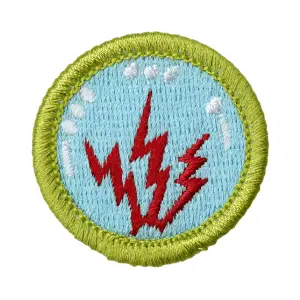
Scouts earning the Radio merit badge gain hands-on experience with equipment and signals. They learn about different types of radios, such as amateur (ham) radios and broadcast radios. This helps them understand how voices and messages travel through the air and reach listeners. These skills are useful and can even lead to new hobbies or career ideas.
Working on the Radio merit badge also helps Scouts improve problem-solving and critical thinking. They learn to set up and use radio equipment, which requires attention to detail and careful planning. Scouts also develop communication skills as they practice speaking clearly over the radio.
The Radio merit badge opens the door to a fascinating world of technology and communication. Scouts discover how radio has shaped history and continues to impact the world today. It’s a fun and educational badge that teaches skills they can use now and in the future.
Find specific helps for some of the Radio merit badge requirements listed below. Some of these resources will just give the answers. Others will provide engaging ways for older Scouts to introduce these concepts to new Scouts.
Scouts must complete ONE of the options for requirement 9 (a, b, c, or d).
Explain what radio is. Then discuss the following:
Radio is a way to send sounds, voices, and even data through the air without wires. It works by using invisible waves, called radio waves, to carry signals from one place to another. These signals can be received by radios, televisions, or even cell phones. Radio is used in many ways, such as listening to music, talking to others with walkie-talkies, or sharing important information in emergencies.
When working on the Radio merit badge, Scouts learn about how radio waves are made and how they travel. Radio waves come from a transmitter, which is a device that sends signals. The signals are picked up by a receiver, like a car radio or a smartphone. The radio waves move through the air at the speed of light, making it possible for people to communicate over long distances.
There are different types of radio communication. Broadcast radio sends music, news, and shows to large audiences. Amateur radio, also called ham radio, is for people who enjoy talking to others around the world as a hobby. Two-way radios, like walkie-talkies, are often used by police, firefighters, and Scouts during events. Learning about these types of radio helps Scouts understand how radio impacts everyday life and why it is still important.
Understanding what radio is and how it works is an exciting part of earning the Radio merit badge. It gives Scouts a chance to explore technology, communication, and science in a fun and hands-on way.
When working on the Radio merit badge, Scouts learn about two types of radio communication: broadcast radio and hobby radio. Each has its own purpose and works in different ways. Understanding these differences will help Scouts complete the Radio merit badge and see how radio is used in everyday life and for fun.
Broadcast radio is used to send information to large audiences. It includes AM and FM radio stations that play music, news, and talk shows. These stations use powerful transmitters to send signals that can reach thousands of people over wide areas.
Hobby radio, also called amateur or ham radio, is used for personal communication and fun. It allows people to talk with others across town or around the world. Amateur radio operators use special equipment and licenses to communicate.
Broadcast radio focuses on sharing information with many people, while hobby radio is about making personal connections and learning new skills. Both types of radio are interesting and play a role in communication. By exploring both, Scouts earning the Radio merit badge can better understand the different ways people use radio technology.
The Radio merit badge helps Scouts understand how radio is used for different purposes. Two common types of radio communication are broadcasting and two-way communications. These serve different needs and work in different ways. Knowing the differences between them is an important step in completing the Radio merit badge.
Broadcasting is a one-way form of communication. A station sends out a signal to many listeners at the same time, but those listeners cannot respond directly to the broadcaster. Broadcasting is often used to share information, news, and entertainment with large audiences.
Two-way communications allow people to send and receive messages. This type of communication is interactive and is used for conversations or sharing information between two or more people. It’s common in emergency services, businesses, and even for fun with walkie-talkies.
Broadcasting is best for reaching many people at once, while two-way communication is ideal for direct conversations. Both are important and have unique uses in daily life. By exploring these types of communication, Scouts working on the Radio merit badge gain a better understanding of how radio technology keeps people connected.
Call signs are unique identifiers used by radio stations and amateur radio operators. They are like names for radio stations and are required by law to help identify who is transmitting. Learning about call signs is an important part of the Radio merit badge because it shows Scouts how radio stations and operators follow rules to keep communication organized and legal.
Broadcast radio stations use call signs to identify themselves on the air. In the United States, these call signs usually start with the letter “K” for stations west of the Mississippi River and “W” for stations east of it. They are followed by a combination of letters, such as “WXYZ” or “KABC.” You’ll often hear a station’s call sign announced between songs or programs.
Amateur radio, also known as ham radio, also uses call signs to identify operators. These call signs are assigned by the government and are unique to each operator. They include letters and numbers that show where the operator is from and their license level. For example, a call sign like “W1ABC” might be for an operator in the northeastern United States.
Call signs make it easier to know who is speaking and ensure everyone follows the rules. Whether you’re listening to a broadcast station or talking to someone with a ham radio, call signs keep radio communication organized and clear. Understanding call signs helps Scouts working on the Radio merit badge appreciate how radio systems are managed worldwide.
The phonetic alphabet is a tool used to make communication clear, especially when speaking over radios. Each letter of the alphabet is matched with a word, so letters can be understood even if the signal is weak or there’s noise. This is an important part of the Radio merit badge because it helps Scouts learn how to communicate effectively in real-world situations.
Here is the phonetic alphabet:
The phonetic alphabet is used when letters need to be spelled out. For example, instead of saying “S-M-I-T-H” on a noisy radio, you would say “Sierra-Mike-India-Tango-Hotel.” This makes sure the message is understood even if the connection isn’t perfect.
By practicing the phonetic alphabet, Scouts can improve their communication skills. It is especially useful in emergencies or during activities where clear communication is important, like Scouting events or service projects. Learning the phonetic alphabet is a key part of the Radio merit badge and helps Scouts become more confident in using radios.
Do the following:
Radio waves are used to send signals both locally and across the world. Learning how these waves travel is an important part of earning the Radio merit badge. By understanding local and global transmission, Scouts can see how radio connects people near and far.
Local Radio Waves
Locally, radio waves travel in straight lines from a transmitter, such as a radio tower, to a receiver, like a car radio. These waves, called ground waves, can reach nearby areas and are often used for FM and AM radio. However, local radio waves have limits because they can’t bend around large objects like hills or mountains.
Global Radio Waves
To reach longer distances, radio waves can bounce off the ionosphere, a layer of Earth’s atmosphere. This process, called skywave propagation, allows signals to travel around the world. Amateur (ham) radio operators often use this method to talk with others far away.
By learning how radio waves travel locally and globally, Scouts working on the Radio merit badge gain a better understanding of how communication works over short and long distances. This knowledge helps them see the science behind radio and how it connects the world.
WWV and WWVH are radio stations run by the National Institute of Standards and Technology (NIST). They broadcast signals that provide time and frequency information, but they can also help you understand shortwave radio reception. Learning about these stations is an important part of the Radio merit badge because they show how shortwave signals behave and what you might hear on your radio.
What WWV and WWVH Broadcast
WWV is located in Colorado, and WWVH is in Hawaii. Both stations broadcast signals on specific shortwave frequencies (like 5 MHz, 10 MHz, and 15 MHz). These signals include time announcements and a tone that you can tune into. Because they use shortwave, their signals can travel long distances by bouncing off the ionosphere.
How They Help with Shortwave Radio
By listening to WWV and WWVH, you can learn about current shortwave reception conditions:
Understanding how WWV and WWVH broadcasts work helps Scouts earning the Radio merit badge explore the science of shortwave radio. This knowledge makes it easier to tune in and enjoy the wide world of shortwave communication.
When working on the Radio merit badge, Scouts learn about the difference between distant (DX) and local radio stations. These terms describe how far the signal travels and the purpose of the station’s broadcasts. Knowing the difference helps Scouts understand radio communication and how stations serve different needs.
Local Stations
Local radio stations are designed to serve nearby areas, usually within a city or a few surrounding towns. Their signals don’t travel far because they use lower power or higher frequencies that don’t carry over long distances. Local stations are great for sharing news, weather updates, and entertainment specific to a community.
Distant (DX) Stations
Distant stations, also called DX stations, are heard far from their original location. DX signals often come from other states or even other countries. These stations use high power or take advantage of the ionosphere to make their signals travel long distances. Amateur radio operators and shortwave listeners often enjoy tuning in to DX stations as a hobby.
By understanding the difference between DX and local stations, Scouts working on the Radio merit badge see how radio connects people both nearby and far away. It also helps them explore the science and fun of tuning in to different types of stations.
When working on the Radio merit badge, Scouts learn about the organizations that regulate and manage radio communication. Two key organizations are the Federal Communications Commission (FCC) and the International Telecommunication Union (ITU). Each has a different role in keeping radio communication organized and useful for everyone.
The Federal Communications Commission (FCC)
The FCC is a U.S. government agency that regulates radio, television, and other forms of communication within the United States. Its job is to make sure people and businesses follow the rules for using the airwaves. The FCC issues licenses for amateur radio operators, sets limits on who can broadcast and on what frequencies, and enforces rules to prevent interference between signals.
The International Telecommunication Union (ITU)
The ITU is a global organization that works with countries around the world. It helps set international rules for radio communication, including what frequencies are used for specific purposes, like emergency communication or broadcasting. The ITU ensures that countries can use radio waves without interfering with each other.
The FCC focuses on communication within the U.S., while the ITU handles global coordination. By understanding these organizations, Scouts working on the Radio merit badge see how radio is managed locally and internationally, helping people stay connected in an organized way.
Do the following:
The electromagnetic spectrum covers a wide range of frequencies, including those used for radio communication. Scouts working on the Radio merit badge explore parts of the spectrum from 300 kHz to 3000 MHz. This range includes the MF, HF, VHF, UHF, and microwave bands, each with different uses in broadcasting and communication.
Frequency Bands
Radio Services
The chart also shows where specific radio services are located on the spectrum:
By studying the electromagnetic spectrum and identifying these radio services, Scouts gain a better understanding of how different frequencies are used. This helps them complete the Radio merit badge and appreciate the science behind communication technology.
Explain how radio waves carry information. Include in your explanation: transceiver, transmitter, receiver, amplifier, and antenna.
Radio waves carry information by turning sounds or signals into electromagnetic waves that travel through the air. These waves are sent out by a transmitter and picked up by a receiver. Understanding how this process works is an important part of the Radio merit badge because it helps Scouts learn the basics of communication technology.
The Transmitter
A transmitter is the device that sends out the radio waves. It takes sounds, such as someone’s voice or music, and changes them into electrical signals. These signals are then sent to an amplifier, which makes them strong enough to travel long distances. From there, the signals go to an antenna, which turns them into electromagnetic waves and sends them into the air.
The Receiver
The receiver is the device that catches the radio waves sent by the transmitter. The waves are captured by the receiver’s antenna and turned back into electrical signals. The receiver processes these signals and plays them as sounds or displays them as data, depending on the type of communication.
The Transceiver
A transceiver is a device that combines both a transmitter and a receiver. It can send and receive radio signals, making it useful for two-way communication, like in amateur radio. Scouts using transceivers during the Radio merit badge learn how to talk and listen using the same equipment.
By understanding how transmitters, receivers, antennas, amplifiers, and transceivers work together, Scouts earning the Radio merit badge can see how information travels over the air. This knowledge is key to exploring radio communication and discovering its many uses.
Radio waves carry information by changing their properties to match the sounds, data, or signals being sent. This process is called modulation. Learning about modulation is important for the Radio merit badge because it helps Scouts understand how messages travel through the air and reach their destination.
Modulation
Modulation changes one or more parts of the radio wave to carry information. A basic radio wave, called a carrier wave, is like a blank slate. When it’s modulated, it stores the information. There are two common ways to modulate a wave:
Storing Digital Information
For digital signals, like those used in modern communication, the wave is modulated in patterns that represent ones and zeros (binary code). These patterns are decoded by the receiver to recreate the original information, like text, images, or sound.
Why It Works
The antenna sends the modulated wave into the air, and the receiver’s antenna picks it up. The receiver decodes the modulation and turns it back into sound, data, or images that people can use. This process works for everything from AM/FM radio to television, cell phones, and Wi-Fi.
By understanding how information is stored in waves through modulation, Scouts earning the Radio merit badge learn the science behind communication. This knowledge helps them appreciate the technology they use every day.
Do the following:
When working on the Radio merit badge, Scouts learn about diagrams used to show how electronic devices like radios work. Two common types are block diagrams and schematic diagrams. Each serves a different purpose, and understanding them is important for completing the Radio merit badge.
Block Diagrams
A block diagram is a simple drawing that shows the basic parts of a system and how they connect. It uses labeled blocks to represent components, like a transmitter, receiver, or antenna. Lines or arrows between the blocks show how signals move through the system. Block diagrams are great for giving a big-picture overview of how something works without going into technical details.
Schematic Diagrams
A schematic diagram is much more detailed and uses symbols to show how individual components, like resistors, capacitors, and transistors, are connected. It’s like a technical map that shows exactly how to build or repair the system. Schematic diagrams are used by engineers, technicians, and hobbyists who need to understand the inner workings of a device.
Key Differences
Block diagrams focus on simplicity and the big picture, while schematic diagrams dive into the details. Both are useful, but they serve different purposes depending on who needs the information.
By learning about block diagrams and schematic diagrams, Scouts earning the Radio merit badge develop a better understanding of how radios and other electronic systems are designed and explained. This knowledge helps them appreciate the science and technology behind communication.
This block diagram shows the basic components of a radio station and how they are connected. It helps Scouts working on the Radio merit badge understand the flow of signals in a communication system.
Components in the Diagram
The diagram shows how signals move step by step, starting from the microphone and ending at the antenna. By learning about this flow, Scouts earning the Radio merit badge gain a better understanding of how radio communication works in real-world applications.
When working on the Radio merit badge, Scouts learn about different ways information can be sent using radio waves. These methods include amplitude modulation (AM), frequency modulation (FM), continuous wave (CW) Morse code, single sideband (SSB) transmission, and digital transmission. Each method has its own way of storing information in the radio waves.
Amplitude Modulation (AM)
In AM, the height of the radio wave (amplitude) changes to match the sound or signal being sent. The frequency of the wave stays the same. AM is commonly used for broadcasting radio programs like music and news. It’s a simple way to send information but can be affected by static or interference.
Frequency Modulation (FM)
In FM, the number of waves per second (frequency) changes to carry the information, while the wave’s height stays the same. This method provides clearer sound and is used for FM radio broadcasts. FM is less affected by interference, making it better for music and high-quality audio.
Continuous Wave (CW) Morse Code
CW uses a simple on-and-off signal to send messages in Morse code. Each dot and dash represents a letter or number. This is one of the oldest forms of radio communication and is still used in amateur radio. It’s a reliable way to send messages over long distances with minimal equipment.
Single Sideband (SSB) Transmission
SSB is a more efficient form of AM. Instead of sending the full AM signal, SSB transmits only one side of the wave and removes the carrier signal. This uses less power and allows for clearer communication. SSB is commonly used in amateur radio for long-distance communication.
Digital Transmission
Digital transmission turns information into a series of ones and zeros (binary code) and sends it using radio waves. This method is used for modern technologies like cell phones, Wi-Fi, and some forms of amateur radio. Digital signals are very efficient and can carry a lot of information, like text, images, and videos.
By exploring these different methods, Scouts earning the Radio merit badge learn how radio waves can carry information in many ways. This helps them understand the science of communication and its practical uses in daily life and emergencies.
NOAA Weather Radio (NWR) is a nationwide network of radio stations that broadcast weather information and emergency alerts 24 hours a day. It is an important tool for staying safe during severe weather or other emergencies. Learning about NOAA Weather Radio is part of the Radio merit badge because it helps Scouts understand how radio technology can save lives.
How It Works
NWR broadcasts warnings and updates directly from the National Weather Service (NWS). These messages include alerts for severe weather, like tornadoes, hurricanes, or floods, as well as other emergencies, such as chemical spills or AMBER alerts. The broadcasts use a special frequency that requires a NOAA weather radio or a compatible device to receive them.
Emergency Alerts
NOAA weather radios can be set to sound an alarm when a warning is issued for your area. This feature, called SAME (Specific Area Message Encoding), ensures you are alerted only to emergencies affecting your specific location. For example, if a tornado warning is issued for your county, the radio will sound an alert even if you’re asleep or not paying attention.
Why It’s Important
Having an NOAA weather radio ensures you stay informed during power outages or when cell phones and the internet aren’t available. By understanding NOAA Weather Radio as part of the Radio merit badge, Scouts learn how this system uses radio technology to keep people safe in emergencies. This knowledge can help them and their communities be better prepared for unexpected dangers.
Cellular telephones use radio waves to send and receive voice, text, and data. They are an important part of modern communication. Learning how cell phones work and their role in emergencies is a key part of the Radio merit badge because it helps Scouts understand how technology keeps people connected.
How Cellular Telephones Work
Cell phones communicate through a network of cell towers. When you make a call or send a text, your phone converts your voice or message into a radio signal. This signal travels to the nearest cell tower and is sent to the network, which routes it to the person you’re contacting. The system uses small geographic areas called “cells,” and as you move, your phone automatically connects to the closest tower.
Benefits in an Emergency
Cell phones are very helpful in emergencies because they:
Limitations in an Emergency
Despite their benefits, cell phones have limitations in emergencies:
Understanding how cell phones work and their role in emergencies is an important part of the Radio merit badge. While they are a valuable tool, it’s also important to have backup plans, like a weather radio or two-way radios, to stay informed and communicate during emergencies.
Explain the safety precautions for working with radio gear, including the concept of grounding for direct current circuits, power outlets, and antenna systems.
When working with radio gear, safety is very important. Learning these precautions is a key part of the Radio merit badge because it helps Scouts understand how to use radio equipment safely and avoid potential dangers. Key areas of focus include grounding, power outlets, and antenna systems.
Grounding
Grounding is the process of connecting electrical equipment to the Earth to prevent dangerous electrical buildup. This is important for:
Precautions for Power Outlets
When working with power outlets:
Antenna Safety
Antenna systems can be dangerous if not handled properly:
By following these safety precautions, Scouts earning the Radio merit badge can work with radio gear confidently and safely. Understanding grounding and proper handling of power and antennas helps protect both the operator and the equipment. This knowledge is essential for anyone using radio systems in Scouting or other activities.
Visit a radio installation (an amateur radio station, broadcast station, or public service communications center, for example) approved in advance by your counselor. Discuss what types of equipment you saw in use, how it was used, what types of licenses are required to operate and maintain the equipment, and the purpose of the station.
Visiting a radio installation is a hands-on way to learn about radio communication and complete a requirement for the Radio merit badge. During your visit, you’ll see equipment in action, learn how it is used, and understand the licenses needed to operate and maintain it. The purpose of the station and its role in communication will also be explained.
Types of Equipment
At a radio installation, you might see equipment like transceivers, amplifiers, antennas, and computers.
Each piece of equipment plays a role in ensuring clear communication across short or long distances.
How the Equipment Is Used
The equipment at the station will depend on its purpose. For example:
Licenses Required
The type of license required depends on the station:
Purpose of the Station
The purpose of the station depends on its type. Amateur radio stations connect people for learning and fun. Broadcast stations focus on reaching large audiences with information and entertainment. Public service communications centers are vital for emergency response, helping first responders stay in touch and save lives.
Visiting a radio installation is a valuable experience for Scouts earning the Radio merit badge. It provides a deeper understanding of radio equipment, operations, and the important roles these stations play in everyday communication and emergencies.
Find out about three career opportunities in radio. Pick one and find out the education, training, and experience required for this profession. Discuss this with your counselor, and explain why this profession might interest you.
Earning the Radio merit badge introduces Scouts to the fascinating world of radio communication. This badge can inspire Scouts to explore careers in radio and related fields, combining technology, creativity, and public service. Here are some career paths a Scout might consider:
Broadcasting
Working in broadcasting involves creating and sharing content like music, news, or entertainment with large audiences. Careers include:
Amateur Radio and Emergency Communications
Amateur radio often leads to careers in emergency services or public safety. Roles include:
Technical and Engineering Careers
For Scouts interested in technology, there are opportunities in designing and maintaining radio systems:
Space and Satellite Communications
Radio waves are vital in space exploration and satellite technology. Careers include:
Digital and Data Communication
With the rise of digital technology, radio has expanded into fields like data transmission and wireless communication. Jobs include:
Exploring these career opportunities helps Scouts earning the Radio merit badge understand how radio impacts many industries. It also shows them how they can turn their interest in radio into a future profession.
Scouts must complete ONE of the options for requirement 9 (a, b, c, or d).
Amateur radio, also called “ham radio,” is a service regulated by the Federal Communications Commission (FCC). It provides people with a way to communicate for fun, education, and public service. Learning about amateur radio is an important part of earning the Radio merit badge.
Why the FCC Has an Amateur Radio Service
The FCC supports amateur radio to encourage technical learning, promote international goodwill, and provide communication during emergencies. Amateur radio operators, also known as “hams,” can assist during disasters by providing emergency communication when other systems fail.
Activities for Licensed Amateur Radio Operators
Licensed hams can:
License Classes and Privileges
Amateur radio has three license levels, each offering more privileges:
Exam Administration
Amateur radio exams are administered by volunteer examiners (VEs) who are licensed hams trained to test and certify new operators.
Five Q Signals and Amateur Radio Terms
Q signals are shorthand used in ham radio to save time:
Making Emergency Calls
To make an emergency call:
Transceivers and Repeaters
Simulated Amateur Radio Contact
Scouts can practice a simulated contact by following these steps:
By exploring amateur radio through these activities, Scouts completing the Radio merit badge gain hands-on experience in communication, learn about radio technology, and understand the importance of amateur radio in emergencies.
Scouts must complete ONE of the options for requirement 9 (a, b, c, or d).
Commercial broadcasting is an important part of radio communication. Understanding FCC regulations, creating program schedules, logging broadcast stations, and learning industry terms are key activities for Scouts earning the Radio merit badge. These tasks give Scouts insight into how radio stations operate and how they reach their audiences.
FCC Regulations for Broadcasting
The Federal Communications Commission (FCC) oversees all U.S. radio broadcasts. Key regulations include:
Preparing a Program Schedule for “KBSA”
Creating a half-hour program schedule requires balancing content to engage listeners. For example:
Recording this program lets Scouts practice using microphones, mixing audio, and editing for smooth transitions.
Logging Broadcast Stations
Listen to and log 15 broadcast stations. For each, note the station’s call sign, frequency, and format. For five stations, determine their target audience. For example:
Broadcasting Terms
Scouts should know at least eight common broadcasting terms:
Alternative Radio Platforms
Radio isn’t limited to traditional broadcasting. Alternative platforms include:
By exploring FCC regulations, programming, and alternative platforms, Scouts completing the Radio merit badge gain a deep understanding of how radio operates and its role in connecting communities.
Scouts must complete ONE of the options for requirement 9 (a, b, c, or d).
Listening to shortwave and medium-wave radio broadcasts helps Scouts understand how radio signals travel and change depending on time of day and frequency. This activity is a key part of earning the Radio merit badge and provides practical experience with logging stations and analyzing signal differences.
Listening to Shortwave Bands
Shortwave radio allows listeners to hear broadcasts from around the world. Scouts should listen for four one-hour periods, including one during the day and one at night. Log each station’s:
At night, shortwave signals often travel farther because the ionosphere reflects them more effectively. During the day, higher frequencies tend to work better because of changes in atmospheric conditions.
Listening to Medium-Wave Stations
Medium-wave (AM) stations are great for understanding local and regional radio. Scouts should log stations during two one-hour periods, one during the day and one at night. Note the same details as for shortwave stations and compare logs. At night, distant AM stations are often clearer because the ionosphere reflects their signals, allowing them to travel farther. During the day, these signals are absorbed, limiting their range.
Comparing Day and Night Logs
Scouts will notice differences in signal strength based on time of day. Shortwave and medium-wave signals are often stronger at night due to ionospheric reflection. Frequencies that are loud and clear during the day may become weaker or disappear at night, and vice versa. Logging these changes helps Scouts see how atmospheric conditions affect radio waves.
Using a Smartphone to Listen to Radio
A smartphone can access traditional and international broadcasts through apps or streaming platforms. Many stations stream their content online, making it easy to hear broadcasts from around the world. For example, Scouts can use apps like TuneIn Radio to find international stations and compare their programs to those heard on shortwave or medium wave.
By listening to shortwave and medium-wave radio, comparing logs, and exploring smartphone broadcasts, Scouts earning the Radio merit badge learn how radio waves behave and how people around the world stay connected through radio communication.
Scouts must complete ONE of the options for requirement 9 (a, b, c, or d).
Amateur Radio Direction Finding (ARDF), also known as “fox hunting,” is an activity where participants use radio signals to locate a hidden transmitter, called the “fox.” This hands-on activity is a fun and educational way for Scouts earning the Radio merit badge to learn about direction finding and its importance.
Why Direction Finding Is Important
ARDF is both a recreational activity and a skill with practical uses.
Frequencies and Equipment for ARDF
ARDF typically uses two frequency ranges:
Equipment needed includes:
Building a Simple Directional Antenna
Scouts can build a simple directional antenna for the 2-meter band using common materials like PVC pipes, wire, and a coaxial cable. Yagi antennas are popular for their accuracy and ease of construction.
Participating in a Fox Hunt
During a fox hunt, Scouts use their directional antenna and receiver to locate the hidden transmitter. They take signal readings from different locations and mark the strongest directions on a map. By triangulating these signals, they can narrow down the fox’s location.
Mapping the Fox’s Location
Using a map, Scouts draw lines showing the direction of the strongest signal from each listening point. The intersection of these lines indicates the approximate location of the fox. Scouts can compare their map to the actual location of the transmitter to check their accuracy.
ARDF and fox hunting are engaging ways for Scouts to apply the skills learned while earning the Radio merit badge. These activities teach the science behind radio waves, develop navigation skills, and provide fun challenges that connect Scouts with amateur radio enthusiasts.
The Communication troop program feature helps Scouts build skills to share ideas and understand others better. It covers verbal and non-verbal communication, body language, and methods for giving and receiving information. Scouts can learn the EDGE method, plan a campfire program, or work on merit badges like the Communication merit badge or the Radio merit badge. These activities teach practical communication skills in fun and engaging ways.
This feature includes games like “Who Am I?” and “Follow My Voice” to make meetings interactive. Scouts can visit a television studio or radio station, which ties in with exploring the Radio merit badge. Advanced activities, like planning a campout to focus on communication, encourage teamwork and leadership. The program is full of ideas to make meetings meaningful while helping Scouts improve communication skills they will use throughout their lives.

The Morse Code interpreter strip is a unique award offered by Scouting America. It recognizes Scouts and leaders who demonstrate skill in Morse Code. This involves practicing listening, copying, and sending messages at a minimum speed of five words per minute. Wearing the strip on the uniform shows that the Scout has learned an important form of communication used in amateur radio and emergencies.
This award complements the Radio merit badge by building practical skills in sending and receiving messages. It also connects to the Radio merit badge’s focus on learning different methods of communication, including Morse Code. Earning the interpreter strip is a fun challenge for Scouts who enjoy working with radios, exploring technology, and practicing precision. It’s a great way to combine tradition with useful modern skills.

Merit badges let Scouts explore new skills and interests while learning about exciting topics. With over 100 options, there’s something for everyone, from outdoor skills to science, technology, and creative arts. Scouts can earn any merit badge at any time, even if they haven’t advanced in rank. Merit badges like the Radio merit badge teach hands-on skills that can lead to hobbies or even future careers.
The Radio merit badge is part of the Information Technology and Communication category, but there are badges for almost every interest. Whether you want to learn about emergency preparedness, entrepreneurship, or artistic hobbies, there’s a badge for you. Merit badges give Scouts the chance to try new things and work with counselors who are experts in their fields. Talk to your Scoutmaster to learn more about the exciting opportunities available through merit badges.

Scouts BSA is a program for youth aged 11 to 17 that helps them develop leadership, character, and life skills. It emphasizes adventure, service, and personal growth through outdoor activities like camping and hiking. Scouts also learn teamwork and leadership by working in patrols. Merit badges, including the Radio merit badge, allow Scouts to explore new interests and skills while advancing through the program.
Earning merit badges like the Radio merit badge helps Scouts discover hobbies or potential careers while gaining practical knowledge. Scouts BSA is open to youth from all backgrounds, offering activities and challenges that build confidence and prepare them for the future. With opportunities for leadership, service, and fun, Scouts BSA provides a strong foundation for success in life.
What is the Radio merit badge about?
The Radio merit badge teaches Scouts how radio communication works. Scouts learn about radios, signals, broadcasting, and how to use equipment. It also covers emergency communication and amateur radio.
Do I need my own radio to earn the Radio merit badge?
No, you don’t need your own radio. Your counselor or a local radio club can provide the equipment needed for activities like listening to broadcasts or practicing with amateur radio.
What is amateur radio, and why is it part of the Radio merit badge?
Amateur radio, or “ham radio,” is a hobby where people use radios to communicate for fun, learning, and emergencies. It is part of the Radio merit badge because it shows how radio can connect people and serve communities.
Do I need a license to use amateur radio?
Yes, you need an FCC license to use amateur radio on your own. However, during the Radio merit badge activities, you can operate under the guidance of a licensed operator.
What is a fox hunt, and why is it part of the Radio merit badge?
A fox hunt is a fun activity where Scouts use direction-finding skills to locate a hidden radio transmitter, called the “fox.” It is part of the Radio merit badge because it helps Scouts learn how to track radio signals.
What types of stations will I listen to for the Radio merit badge?
You will listen to shortwave, medium-wave (AM), and possibly FM stations. You will also explore international broadcasts and may hear amateur radio operators.
Why do we learn about FCC regulations for the Radio merit badge?
The FCC sets rules for how radio is used to prevent interference and keep communication organized. Learning these rules helps Scouts understand the importance of using radio responsibly.
How does radio help in emergencies?
Radio is used in emergencies when other communication systems fail. Amateur radio operators and NOAA Weather Radio provide critical information during disasters. Scouts learn how radio can save lives while working on the Radio merit badge.
What careers can the Radio merit badge lead to?
The Radio merit badge introduces Scouts to careers in broadcasting, emergency communications, engineering, and satellite technology. It’s a great starting point for exploring these fields.
Can I earn the Radio merit badge online?
Some parts, like studying FCC rules or logging radio stations, can be done at home. However, hands-on activities like using radio equipment or participating in a fox hunt usually require in-person involvement.
The Radio merit badge introduces Scouts to the exciting world of communication through radio waves. It combines science, technology, and hands-on activities to show how radios work and how they connect people worldwide. Scouts learn about different types of radio communication, including amateur (ham) radio, broadcast radio, and emergency communication systems.
This badge helps Scouts understand the basics of how radio waves carry information. They discover how transmitters, receivers, antennas, and amplifiers work together to send and receive signals. Activities like building a simple antenna, listening to shortwave broadcasts, and participating in a fox hunt make learning fun and interactive.
The Radio merit badge also teaches the real-world importance of radio. Scouts explore FCC regulations, learn how radio is used in emergencies, and even try amateur radio communication. They also get a chance to listen to international broadcasts, log stations, and practice using radio equipment.
Whether you’re interested in technology, public service, or just want to explore a new hobby, the Radio merit badge offers something for everyone. It’s a great way to build skills, have fun, and maybe even discover a future career in communication.
JL VETERAN 37 MALANG