


The Oceanography merit badge is a great way for Scouts to learn about the ocean and how it works. The ocean covers most of the Earth, and it affects the weather, climate, and life on our planet. By earning the Oceanography merit badge, Scouts get to explore this amazing part of the natural world.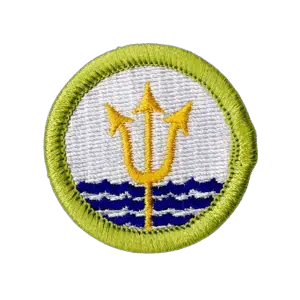
Scouts who work on the Oceanography merit badge will discover how the ocean moves, how it supports life, and why it is so important to protect. They will study waves, currents, and tides. They will also learn about marine life and how it depends on the ocean for survival. This badge gives Scouts a better understanding of how the ocean connects to the rest of the Earth.
Earning the Oceanography merit badge can spark an interest in science and a love for the environment. Scouts will learn how to think like scientists by observing, asking questions, and solving problems. This experience can help them in school and with other activities.
Working on the Oceanography merit badge can also inspire Scouts to take action. They might choose to help clean up beaches, protect marine animals, or share what they have learned with others. This badge helps Scouts see how they can make a difference in caring for the Earth.
Find specific helps for some of the merit badge requirements listed below. Some of these resources will just give the answers. Others will provide engaging ways for older Scouts to introduce these concepts to new Scouts.
Name four branches of oceanography. Describe at least five reasons why it is important for people to learn about the oceans.
When earning the Oceanography merit badge, you will learn that oceanography is the study of the ocean. There are several branches of oceanography. Each one focuses on a different part of understanding the ocean and how it affects the world.
Here are some branches of oceanography:
Learning about these areas helps Scouts understand how the ocean connects to many parts of our world.
The Oceanography merit badge helps Scouts learn why oceans are essential to the Earth. Here are some reasons why studying the oceans matters:
By learning about the ocean through the Oceanography merit badge, Scouts gain knowledge that helps them appreciate this vital part of the Earth and take steps to protect it.
Define salinity, temperature, and density, and describe how these important properties of seawater are measured by the physical oceanographer. Discuss the circulation and currents of the ocean. Describe the effects of the oceans on weather and climate.
When earning the Oceanography merit badge, you’ll learn about important properties of seawater and how they affect the ocean and the Earth. Physical oceanographers study these properties to understand the ocean’s behavior and its impact on the planet.
These properties affect how water moves and supports life in the ocean.
Ocean circulation refers to the movement of water through the world’s oceans. There are two main types of currents:
These currents work together to form a global system called the ocean conveyor belt, which helps move heat, nutrients, and oxygen around the planet.
The ocean plays a big role in weather and climate. It stores heat from the sun and releases it slowly, which helps regulate temperatures. Warm ocean water can fuel hurricanes and storms, while cold currents can cool nearby areas. The ocean also creates global wind patterns and helps bring rain to coastal regions.
By studying these systems as part of the Oceanography merit badge, Scouts can see how the ocean shapes life on Earth and learn why it is so important to care for it.
Describe the characteristics of ocean waves. Point out the differences among the storm surge, tsunami, tidal wave, and tidal bore. Explain the difference between sea, swell, and surf. Explain how breakers are formed.
As you work on the Oceanography merit badge, you’ll learn about ocean waves and how they move through the water. Waves are caused by wind, earthquakes, or the gravitational pull of the moon and sun. They are made up of crests (the high points) and troughs (the low points). The distance between two crests is called the wavelength, and the height from the crest to the trough is the wave height.
Understanding these types of waves is important for safety and for appreciating how the ocean works.
A breaker is a wave that collapses as it reaches shallow water near the shore. When the bottom of the wave slows down due to friction with the seafloor, the top of the wave moves faster, causing it to curl and crash. Breakers are what you see when waves “break” at the beach, creating white foam.
The Oceanography merit badge helps Scouts understand these natural forces and how they shape the world’s coastlines and marine environments. This knowledge can also help Scouts stay safe when they visit the ocean.
Draw a cross-section of underwater topography. Show what is meant by:
When earning the Oceanography merit badge, Scouts learn about the underwater features of the ocean floor. These features include the continental shelf, continental slope, and abyssal plain. Each plays an important role in the structure of the ocean and supports marine life.
Understanding these features helps Scouts see how the ocean floor varies and why different parts of the ocean have different ecosystems.
Below is a simple cross-section diagram of these features:
Coastline Ocean Surface
|__________ <- Continental Shelf
<- Continental Slope
___________ <- Abyssal Plain
By studying these underwater features as part of the Oceanography merit badge, Scouts gain a better understanding of how the ocean supports life and shapes our planet.
List the main salts, gases, and nutrients in sea water. Describe some important properties of water. Tell how the animals and plants of the ocean affect the chemical composition of seawater. Explain how differences in evaporation and precipitation affect the salt content of the oceans.
As you work on the Oceanography merit badge, you’ll learn about the salts, gases, and nutrients in seawater. These chemical components support marine life and affect how the ocean works. Understanding seawater chemistry helps scientists study marine ecosystems and protect the ocean.
The Oceanography merit badge teaches Scouts how these processes work together to maintain the delicate balance of the ocean. This knowledge helps Scouts understand why the ocean is so important to life on Earth.
Describe some of the biologically important properties of seawater. Define benthos, nekton, and plankton. Name some of the plants and animals that make up each of these groups. Describe the place and importance of phytoplankton in the oceanic food chain.
As you explore the Oceanography merit badge, you’ll learn that seawater has unique properties that make it an ideal home for marine life. It provides dissolved oxygen for animals, nutrients for plants, and stable temperatures that help organisms survive. These properties create the foundation for life in the ocean.
Phytoplankton are microscopic plants that live near the ocean’s surface. They use sunlight to produce energy through photosynthesis. This process releases oxygen, making phytoplankton a major source of the oxygen we breathe.
Phytoplankton are also the foundation of the oceanic food chain. Small animals like zooplankton eat them, and larger animals like fish and whales eat the zooplankton. Without phytoplankton, the entire marine food web would collapse.
Learning about the properties of seawater and the roles of benthos, nekton, and plankton in the ecosystem is a key part of earning the Oceanography merit badge. This knowledge helps Scouts understand how life in the ocean is interconnected.
Do ONE of the following:
As part of the Oceanography merit badge, you may collect plankton using a homemade plankton net. This activity helps you see some of the tiny organisms that form the foundation of the ocean’s food chain. It’s a hands-on way to learn how scientists study life in the ocean.
A plankton net is a cone-shaped net designed to catch small organisms floating in the water. To make one, you’ll need fine mesh fabric (like nylon), a hoop for the opening (a coat hanger works), and a container to collect the sample. Attach the fabric to the hoop, then secure a small bottle or jar to the narrow end to catch the plankton.
Tow the net in the water for about 20 minutes. You can do this by:
Once you have your sample, transfer it carefully to a clear container for observation.
To study your sample, use a microscope or a magnifying glass. You’ll likely find two main types of plankton:
Plankton are the foundation of the oceanic food chain. Phytoplankton produce oxygen and serve as food for zooplankton. Zooplankton, in turn, feed larger animals like fish and whales. By studying plankton as part of the Oceanography merit badge, you can see how even the smallest organisms are vital to life in the ocean.
This activity also teaches you how scientists gather and analyze samples to learn about ocean ecosystems. It’s a fun and educational way to explore marine life up close.
The Oceanography merit badge includes learning about how coral reefs form around volcanic islands. One way to understand this process is by creating models that show the stages of reef growth and the development of an atoll. You’ll also learn about the Darwinian theory of coral reef formation, which explains how this natural process occurs.
You can use materials like clay or plaster for the island and wood or small plastic pieces for the reef. Create three models to show the stages of reef growth:
These models show how reefs change over time as the land beneath them moves and sinks.
Charles Darwin was the first to propose a scientific explanation for how atolls form. His theory states that coral reefs grow upward as volcanic islands slowly sink over millions of years. The coral keeps building toward the surface, staying in the shallow water where it can get sunlight.
The stages of reef formation—fringing reef, barrier reef, and atoll—happen because the coral grows while the island sinks. Darwin’s theory has been supported by modern studies of coral reefs and volcanic islands.
Coral reefs are important ecosystems that support a wide variety of marine life. They protect coastlines from waves and storms, provide food and shelter for fish, and are valuable to humans for fishing and tourism.
By making these models and studying coral reefs as part of the Oceanography merit badge, Scouts learn how natural processes shape the ocean environment and why coral reefs need to be protected.
The Oceanography merit badge includes activities to help you understand how water temperature and clarity are affected by weather and environmental conditions. Measuring water temperature at different depths, checking turbidity, and recording weather observations gives you insight into how the atmosphere and water interact.
To measure water temperature:
A Secchi disk is a simple tool used to measure turbidity, or how clear the water is. To make one:
Each time you take measurements, also record:
After collecting your data, create graphs to compare:
Water temperature often changes with air temperature, especially at the surface. When the air is warmer, the surface temperature rises. However, deeper water remains more stable because sunlight and air do not directly heat it.
By completing these observations for the Oceanography merit badge, you’ll gain a deeper understanding of how water and air interact and how scientists study aquatic environments. This hands-on activity helps you see how weather, sunlight, and sediment affect bodies of water.
As part of the Oceanography merit badge, you’ll study how waves, tides, and currents move sand and sediment along the shore. Creating a model helps you understand coastal features and how they change over time due to natural forces like littoral currents and wave action.
Your model should show these formations:
Offshore bars can change over time. Strong waves pile sand to form the bars, but storms or shifting currents can break them down.
Studying sediment movement helps scientists understand how coastlines change and how to protect them. Beaches erode naturally over time, but human activities like building seawalls or dredging can speed up these changes. By creating this model as part of the Oceanography merit badge, you’ll learn how the ocean shapes the land and why it’s important to protect coastal environments.
The Oceanography merit badge includes hands-on activities to learn about how waves move and how structures like groins, jetties, and breakwaters change wave patterns. A simple wave generator lets you see how waves reflect, refract, and interact with obstacles.
You can make a wave generator using a shallow tray or clear aquarium, water, and a paddle:
Place small objects like blocks or rocks in the tray to represent coastal structures:
Waves are powerful forces that shape coastlines. Structures like groins, jetties, and breakwaters are designed to protect beaches and harbors, but they can also disrupt natural sand movement, causing erosion in some areas while building up sand in others.
By using a wave generator and studying these effects for the Oceanography merit badge, you’ll better understand how waves behave and how human structures interact with natural forces. This knowledge helps Scouts appreciate the balance needed to manage and protect coastal environments.
As part of the Oceanography merit badge, tracking satellite images is a great way to learn about changes in the ocean and coastal environments over time. Satellite images show large-scale features like ocean currents, temperature changes, and weather patterns. By monitoring these images for three weeks, you can observe how the ocean and atmosphere interact.
To track satellite images, choose a website that provides up-to-date satellite data. Some good options include:
Look for a specific feature to monitor, like ocean surface temperatures, algae blooms, or weather systems, and record your observations regularly.
Create a journal to record what you see. Take notes on patterns or changes in the area you are monitoring. You can also take screenshots to compare images week by week.
After three weeks, summarize your findings:
Satellites provide a bird’s-eye view of the ocean, showing large-scale processes that are impossible to see from the ground. By analyzing these images for the Oceanography merit badge, Scouts can learn how the ocean changes over time and how it affects the planet. This activity also introduces Scouts to tools used by oceanographers to study and protect the Earth’s oceans.
Do ONE of the following:
For the Oceanography merit badge, reading a book about oceanography is a great way to deepen your knowledge about the ocean. A good book can explain how the ocean works, its role in Earth’s systems, and the challenges it faces. Below are some recommended books.
To fulfill this requirement, visit an oceanographic research ship, marine laboratory, oceanographic institute, or marine aquarium. Choose a location where you can learn about marine science, ocean ecosystems, or the technology used to study the ocean. Plan your visit in advance and find out if there are tours, exhibits, or staff available to answer questions.
During your visit, focus on how scientists study the ocean. Look for exhibits or demonstrations about marine life, water quality, and ocean systems. Pay attention to how they monitor important properties like temperature, salinity, and turbidity. If visiting a marine aquarium, observe the variety of species and how their habitats are recreated.
Take notes about what you see and learn. Ask questions about challenges the ocean faces, like pollution, climate change, or overfishing. These observations will help you prepare your report and understand how your visit connects to the concepts covered in the Oceanography merit badge.
After your visit, reflect on how the experience deepened your understanding of oceanography and the importance of protecting the ocean.
The Oceanography merit badge helps Scouts understand why the ocean is vital to life on Earth and introduces them to the many ways people study and work with the ocean. Oceanography covers everything from marine life and ecosystems to the physical and chemical processes that shape the ocean. Whether explaining the importance of oceanography or exploring career opportunities, Scouts can share what they’ve learned and inspire others to appreciate and protect this essential part of our planet.
By discussing these points, Scouts can explain how oceanography, as studied through the Oceanography merit badge, helps us understand and protect the planet.
If you choose to talk about careers, explain that oceanography has many fields and offers opportunities to work in science, technology, and environmental protection. Here are some careers to explore further:
Encourage Scouts to research these careers and consider how their work might help protect and explore the ocean. Completing the Oceanography merit badge gives Scouts a foundation to explore these exciting opportunities.
Describe four methods that marine scientists use to investigate the ocean, underlying geology, and organisms living in the water.
As part of the Oceanography merit badge, Scouts learn how scientists investigate the ocean and its ecosystems. Marine scientists use a variety of methods to explore the water, the ocean floor, and the life within it. Each technique provides valuable data to help us understand the ocean’s role on Earth.
Each of these methods helps marine scientists answer important questions about the ocean, like how it supports life, how it changes over time, and how humans are impacting it. By learning about these tools and techniques, Scouts working on the Oceanography merit badge gain insight into how science is used to explore and protect the ocean.

The Science troop program feature helps Scouts explore the world by asking questions and testing ideas. It includes activities like learning about chemistry, physics, and biology or investigating how science works in real life. Scouts can try games like Helium Stick and Sci-Fi Trivia to keep meetings fun and engaging. This program encourages curiosity and teaches skills like forming hypotheses and designing experiments.
The program also suggests exciting events, like visiting a science museum or helping with a research project. It connects well with the Oceanography merit badge, which teaches Scouts about marine science and exploration. Both programs inspire a deeper understanding of science and how it shapes our world.
The Wildlife Management troop program feature helps Scouts learn how to protect and support wildlife while understanding the role humans play in nature. Scouts explore topics like wildlife habitats, endangered species, and the balance of ecosystems. They also learn about agencies involved in conservation and discuss careers in wildlife management. Fun games like Predator and Prey and Name That Fish keep meetings engaging and interactive.
The program includes exciting activities, such as visiting wildlife refuges or participating in conservation projects. It connects with the Oceanography merit badge by emphasizing the importance of protecting marine species and their habitats. The Oceanography merit badge also helps Scouts understand how ocean ecosystems are part of the natural balance of wildlife on Earth.

Merit badges let Scouts explore new skills and interests while learning about many exciting topics. With over 100 merit badges to choose from, you can dive into areas like outdoor adventure, science, technology, and creative hobbies. Any Scout can start earning merit badges at any time, no matter their rank. They are a fun way to discover talents and gain knowledge that can help in the future.
The Oceanography merit badge is a great example of how merit badges can teach about science and nature. It helps Scouts explore the ocean and learn about marine life, waves, and currents. By earning the Oceanography merit badge, Scouts gain valuable skills and a better understanding of the world around them.

Scouts BSA is a program for youth aged 11 to 17 that teaches leadership, outdoor skills, and service to others. Scouts participate in activities like camping, hiking, and earning merit badges like the Oceanography merit badge. The program focuses on teamwork, personal growth, and preparing Scouts to make ethical choices throughout their lives.
Merit badges let Scouts explore interests and gain new skills. Through activities such as earning the Oceanography merit badge or taking on leadership roles, Scouts BSA helps members build confidence and develop lifelong abilities. The program welcomes everyone and encourages each Scout to reach their full potential.
What do I learn by earning the Oceanography merit badge?
You learn about the ocean and its ecosystems. This includes topics like waves, currents, marine life, and how humans affect the ocean. You’ll also study tools and methods scientists use to explore the ocean.
Do I need to live near the ocean to earn the Oceanography merit badge?
No, you don’t need to live near the ocean. Many activities, like studying satellite images or building models, can be done anywhere. Visiting a marine aquarium or using online resources can also help you complete the badge.
What hands-on activities are part of the Oceanography merit badge?
Activities include making a plankton net, building models of coral reefs or wave patterns, and using a Secchi disk to measure water clarity. You may also monitor weather, water temperature, or satellite images.
Why is the Oceanography merit badge important?
It helps you understand why the ocean is important to life on Earth. You learn how the ocean regulates climate, supports marine life, and provides resources. This badge also teaches about protecting the ocean from threats like pollution.
What is a Secchi disk, and how do I use it as part of the Oceanography merit badge?
A Secchi disk is a tool used to measure water turbidity (clarity). It’s a round disk with black-and-white sections. You lower it into the water and record the depth where it disappears. This helps you understand how much sediment or algae is in the water.
What careers can I learn about while earning the Oceanography merit badge?
Careers include marine biology, ocean engineering, and environmental science. Other fields include physical oceanography, chemical oceanography, and marine policy. The badge introduces you to the wide range of jobs that involve studying and protecting the ocean.
Do I have to write a report for the Oceanography merit badge?
Yes, some activities require writing a report, like tracking satellite images or visiting a marine aquarium. The reports are a way to summarize what you learn and share your observations.
How long does it take to earn the Oceanography merit badge?
It depends on how quickly you complete the activities. Some parts, like monitoring water temperatures or tracking satellite images, require multiple days. Plan to spend at least a few weeks working on the badge.
What if I have trouble understanding some of the science topics for the Oceanography merit badge?
Your merit badge counselor is there to help. Ask questions if you’re confused, and use simple examples to explain what you learn. The goal is to understand the basics of oceanography, not to become an expert.
How does the Oceanography merit badge connect to other badges?
This badge relates to Environmental Science, Weather, and Fish and Wildlife Management. It also connects to STEM-related badges like Robotics and Engineering. Working on these badges together can deepen your understanding of science and the environment.
The Oceanography merit badge introduces Scouts to the wonders of the ocean. Covering over 70% of the Earth’s surface, the ocean is a vital part of life on our planet. This badge helps Scouts explore the science of waves, currents, and tides. It also teaches about marine life, the ocean floor, and how humans affect the sea.
While working on the Oceanography merit badge, Scouts learn about the tools and methods scientists use to study the ocean. They might measure water clarity with a Secchi disk, track satellite images, or build models of coral reefs. These activities show how researchers investigate the ocean’s mysteries and solve problems like pollution and climate change.
The Oceanography merit badge also inspires Scouts to think about careers in oceanography. They can explore fields like marine biology, ocean engineering, and environmental science. By earning the Oceanography merit badge, Scouts gain a better understanding of the ocean and its importance to life on Earth. It’s a chance to discover how we can all help protect this amazing resource.
JL VETERAN 37 MALANG