Free Resources and Answers
Time: 1 – 2 weeks
Difficulty: Challenging
Setting: Indoor, outdoor, field activities
Best For: Scouts interested in wildfire, forestry, firefighting, conservation
Hands-On Level: High
Eagle Required: No
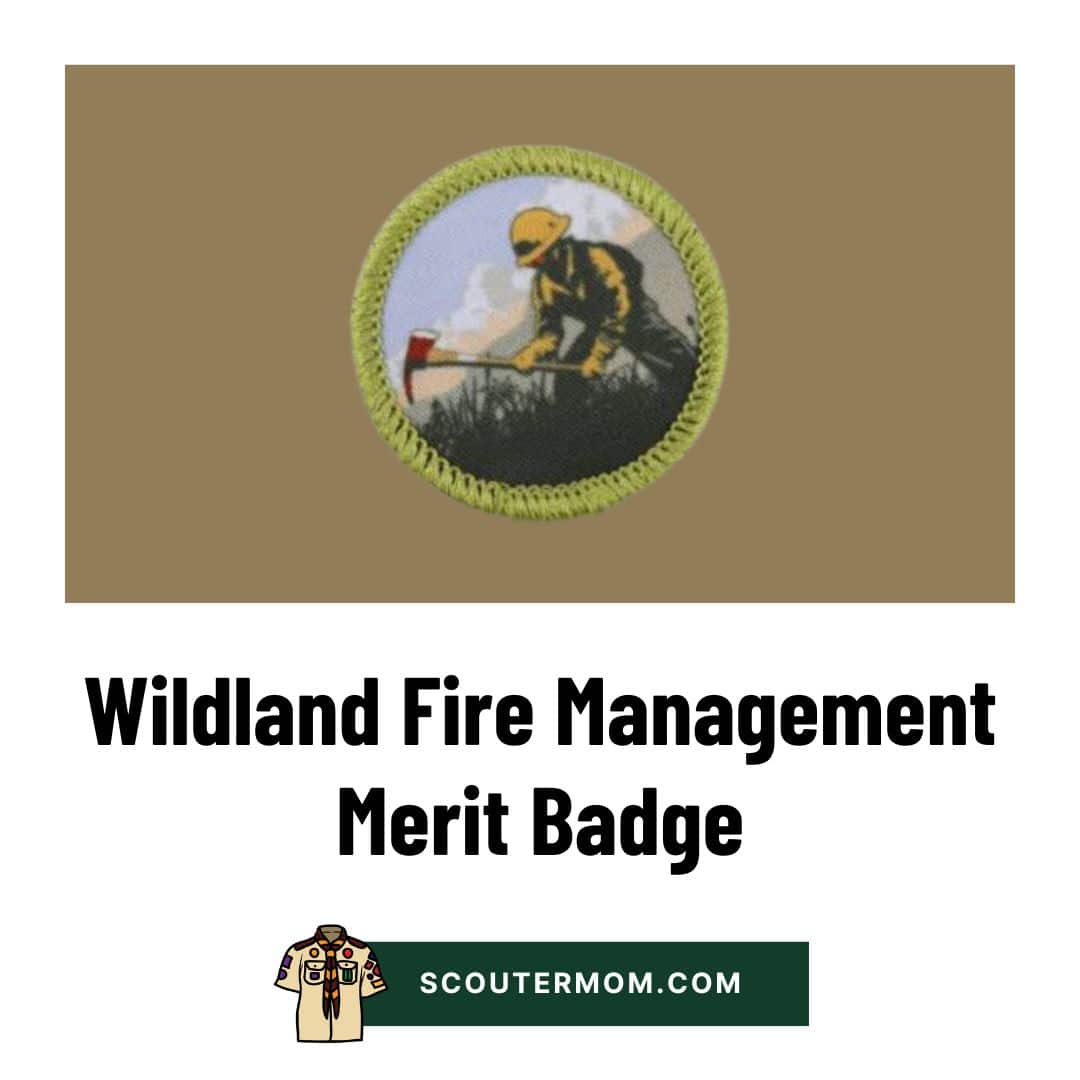
Wildland Fire Management merit badge gives you a closer look at how wildfires start, spread, and affect forests, wildlife, water, communities, and people. You will learn how weather, terrain, and fuel shape fire behavior. You will also explore how prescribed fire can improve habitats, restore ecosystems, and reduce the risk of more destructive fires.

Download a handout about the Wildland Fire Management Merit Badge
You will study how wildland firefighters work safely and how they suppress fires using crews, tools, machinery, and aircraft. You will learn about firelines, direct and indirect attacks, mop-up, and the Incident Command System. Several requirements let you demonstrate what you know by drawing diagrams, using firefighting tools, planning suppression tactics, and examining wildfire risks.
The badge also asks you to connect what you learn with real situations. You might assess wildfire risks, meet with a fire or forestry professional, study local fire weather, or create a readiness plan. You will research a major wildfire and the lessons learned from it. By the end, you will understand both the challenges of managing wildland fire and the careers that help protect people and natural resources.
Wildland Fire Management Merit Badge Requirements and Workbook
Wildland Fire Management Merit Badge Answers and Resources
Help with Answers for Wildland Fire Management Merit Badge Requirements
Find specific helps for some of the Wildland Fire Management merit badge requirements listed below. Some of these resources will just give the answers. Others will provide engaging ways for older Scouts to introduce these concepts to new Scouts.
Requirement 1: History of Wildland Fire
Research and discuss with your counselor the history of wildland fire, its suppression, prevention, and management in the United States.
Wildland Fire Management Merit Badge Requirement 1 Helps and Answers
Requirement 1: History of Wildland Fire
What You Need To Do
Research the history of wildland fire in the United States. Discuss with your counselor how approaches to fire suppression, prevention, and management have changed over time.
Helpful Tips
- Wildfire has always been part of many ecosystems in the United States.
- Native peoples used controlled fire for land management long before modern firefighting agencies existed.
- For many years, fire agencies focused heavily on putting out wildfires as quickly as possible.
- Fire suppression can reduce immediate damage, but it can also allow dead plants and other fuels to build up.
- Wildfire prevention includes reducing human-caused fires through safe outdoor practices and public education.
- Modern fire management may include wildfire suppression, prescribed fire, fuel reduction, and protection of communities.
- Prescribed fires are planned burns used under specific conditions to reduce fuels or support healthy ecosystems.
- Your discussion should cover how fire policies and management practices have changed during U.S. history.
Resources
Leader Tips
- Help Scouts organize their research into major periods or changes in fire management.
- Encourage the use of reliable sources from fire, forestry, and land management agencies.
- Ask open-ended questions about why fire policies changed over time.
- Keep the discussion focused on suppression, prevention, and management in the United States.
Requirement 2: Harms of Wildfire
Research the harm caused by wildfire in the United States, including annual acres burned for the past three years. Discuss with your counselor. Include the negative impacts that wildfire has on the following:
- Commercial forest products
- Fish and wildlife habitat
- Soil and water
- Recreation and public use
- Homes, communities, and human resources
- Air quality and public health
Wildland Fire Management Merit Badge Requirement 2 Helps and Answers
Requirement 2: Harms of Wildfire
What You Need To Do
Research the damage wildfires can cause in the United States. Include the total acres burned during the past three complete years, then discuss the major effects of wildfire with your counselor.
Helpful Tips
- In 2025, wildfires burned 5,131,474 acres in the United States.
- In 2024, wildfires burned 8,924,884 acres.
- In 2023, wildfires burned 2,693,910 acres.
- Wildfire damage can affect natural resources, communities, businesses, and public health.
- The amount of damage varies with fire size, intensity, location, and conditions.
- Include examples from each topic in Requirements 2a through 2f.
- Use recent wildfire reports or government fire statistics for your research.
Resources
Leader Tips
- Help Scouts find reliable wildfire statistics from government sources.
- Ask Scouts to compare the acreage burned during the three years.
- Encourage specific examples instead of broad statements about wildfire damage.
- Keep the discussion connected to all six impact areas in the requirement.
Requirement 2a: Commercial Forest Products
What You Need To Do
Include the negative effects wildfire can have on commercial forest products. Focus on resources such as timber and other materials harvested from forests.
Helpful Tips
- Severe wildfire can kill trees before they are ready for harvest.
- Fire can damage wood and lower its value for lumber or other products.
- Burned timber may need to be removed quickly before it loses more value.
- Fires can damage logging roads, equipment, storage areas, and other facilities.
- Lost trees can reduce the amount of timber available for future harvests.
- Forest businesses and workers may lose income when fires close or damage working forests.
- Recovery can take many years because replacement trees need time to grow.
Leader Tips
- Ask Scouts to connect forest damage with the products people use.
- Use a local forest industry example when one is available.
- Encourage Scouts to consider both immediate losses and long-term effects.
- Keep the focus on negative impacts required by the badge.
Requirement 2b: Fish and Wildlife Habitat
What You Need To Do
Research how wildfire can harm places where fish and wildlife live. Include effects on food, shelter, water, and breeding areas.
Helpful Tips
- Intense fires can destroy nests, dens, cover, and other shelter.
- Animals may be injured, killed, or forced to leave an area.
- Fire can remove plants animals depend on for food.
- Loss of vegetation can leave wildlife with less protection from predators and weather.
- Ash, soil, and debris can wash into streams after a fire.
- Changes in water temperature or water quality can harm fish and other aquatic life.
- Some habitats recover quickly, while severely burned areas may need much more time.
Resources
Leader Tips
- Help Scouts separate immediate wildlife impacts from habitat changes after the fire.
- Encourage examples involving both land animals and aquatic species.
- A local species can make the discussion easier to relate to.
- Keep this section focused on harmful effects.
Requirement 2c: Soil and Water
What You Need To Do
Research the negative effects wildfire can have on soil and water. Include problems that can continue after the flames are gone.
Helpful Tips
- Severe fire can remove plants and ground cover that protect soil.
- Bare soil is more likely to erode during rain or snowmelt.
- Runoff can carry ash, sediment, and debris into streams and lakes.
- Heavy runoff after a fire can increase the risk of flooding and mudflows.
- Sediment can reduce water quality and damage aquatic habitat.
- Burned watersheds may affect reservoirs and drinking-water supplies.
- Recovery begins as vegetation returns and roots once again help hold soil in place.
Resources
Leader Tips
- Use a watershed or stream example to connect soil and water impacts.
- Ask Scouts to trace what can happen when rain falls on a burned slope.
- Pictures of post-fire erosion can help make the process clear.
- Keep the discussion centered on harmful effects.
Requirement 2d: Recreation and Public Use
What You Need To Do
Research how wildfire can limit recreation and public use of forests and other wildland areas. Include both closures during fires and damage left afterward.
Helpful Tips
- Wildfires can close parks, forests, campgrounds, roads, and trails.
- Closures protect visitors and give firefighters room to work safely.
- Fire can damage campsites, signs, bridges, trails, and other recreation facilities.
- Smoke may make outdoor activities unsafe or unpleasant far from the fire itself.
- Burned trees can fall across trails or create hazards in recreation areas.
- Popular areas may stay closed while crews repair damage and remove hazards.
- Nearby businesses may lose customers when recreation areas are closed.
Leader Tips
- Ask Scouts to use recreation activities they already know as examples.
- A nearby park, forest, or Scout camp can make this topic easier to discuss.
- Include both temporary closures and longer-lasting damage.
- Keep examples tied to public use and recreation.
Requirement 2e: Homes, Communities, and Human Resources
What You Need To Do
Research how wildfire can affect homes, communities, and people. Include damage, evacuations, disruption, and the demands placed on emergency workers.
Helpful Tips
- Wildfires can destroy homes, businesses, utilities, roads, and other property.
- Evacuations may force families to leave with little notice.
- Communities can lose electricity, water, transportation, or other services.
- Schools, businesses, and public facilities may close during a fire.
- Firefighters, emergency medical crews, law enforcement officers, and other workers may spend long periods responding.
- Residents can face lost income, housing costs, and other expenses after a fire.
- Rebuilding homes and community services may take months or years.
Leader Tips
- Encourage Scouts to look beyond burned buildings when discussing community effects.
- Include evacuation, emergency services, and recovery.
- Use real examples carefully, especially when discussing deaths or major losses.
- Keep the discussion factual and respectful.
Requirement 2f: Air Quality and Public Health
What You Need To Do
Research how wildfire smoke affects air quality and human health. Include both nearby communities and places where smoke travels far from the fire.
Helpful Tips
- Wildfire smoke contains gases and very small particles.
- Smoke can travel many miles from the wildfire itself.
- Heavy smoke can make outdoor air unhealthy to breathe.
- Smoke may cause coughing, irritated eyes, headaches, and trouble breathing.
- People with heart or lung conditions can face greater health risks from smoke.
- Children, older adults, and outdoor workers may also be more affected.
- Smoke can lead to outdoor event cancellations, school changes, or warnings to stay indoors.
Resources
Leader Tips
- Help Scouts connect wildfire smoke with air-quality reports or alerts.
- Encourage examples showing how smoke can affect areas far from a fire.
- Keep medical discussion general rather than giving health advice.
- Focus on the public-health effects required for the badge.
Requirement 3: Fire as a Management Tool
Discuss with your counselor how prescribed fire is used to accomplish the following:
- Fuel reduction
- Fish and wildlife habitat enhancement
- Ecosystem restoration
- Forest regeneration
- Insect and disease control
Wildland Fire Management Merit Badge Requirement 3 Helps and Answers
Requirement 3: Fire as a Management Tool
What You Need To Do
Discuss how prescribed fire can be used as a planned land management tool. Cover each purpose listed in Requirements 3a through 3e.
Helpful Tips
- Prescribed fire is a planned fire set under chosen weather and fuel conditions.
- Trained crews use a written plan before conducting a prescribed burn.
- The goal is to meet specific land management needs while keeping the fire within set boundaries.
- Prescribed fire can reduce fuels, improve habitat, restore ecosystems, help forests regenerate, and control some insects and diseases.
- Weather, fuel moisture, wind, and nearby resources all affect when a burn can take place.
- Fire managers prepare control lines and safety plans before ignition.
- Prescribed fire is different from an uncontrolled wildfire.
Resources
Leader Tips
- Help Scouts connect each use of prescribed fire with a clear land management goal.
- Use local examples when prescribed burning is common in your area.
- Keep safety and planning part of the discussion.
- Make sure Scouts cover all five uses listed in the requirement.
Requirement 3a: Fuel Reduction
What You Need To Do
Discuss how prescribed fire can reduce fuels that may feed a future wildfire. Focus on dead plants, leaf litter, brush, and other burnable material.
Helpful Tips
- Forest floors can collect dead leaves, needles, branches, and other fuel.
- Thick brush can also add to the amount of material available to burn.
- Prescribed fire can remove some of this fuel under controlled conditions.
- Less fuel can reduce the intensity of some future wildfires.
- Lower fuel levels can make wildfire suppression safer and easier in some areas.
- Burns are planned to avoid removing more vegetation than needed.
- Fuel reduction may also include thinning, mowing, or removing brush.
Resources
Leader Tips
- Show Scouts examples of light and heavy fuel buildup.
- Ask how fuel amount can affect fire intensity.
- Connect prescribed fire with other fuel reduction methods.
- Keep the focus on reducing future wildfire risk.
Requirement 3b: Fish and Wildlife Habitat Enhancement
What You Need To Do
Discuss how prescribed fire can improve habitat for fish and wildlife. Focus on food, shelter, plant growth, and habitat conditions.
Helpful Tips
- Fire can remove old plant growth and allow new plants to grow.
- Fresh grasses and plants can provide food for wildlife.
- Some animals benefit from more open areas created by fire.
- Other species depend on habitats that are maintained by periodic fire.
- Prescribed burns can help create a mix of grasses, shrubs, and trees.
- Healthy plant communities near streams can support insects and other food sources for fish.
- Burn plans are designed to protect sensitive habitat and avoid unnecessary damage.
Resources
Leader Tips
- Use examples of wildlife species that benefit from fire-managed habitats.
- Help Scouts connect vegetation changes with food and shelter.
- Include both land and aquatic habitat when useful.
- Keep the discussion focused on habitat improvement.
Requirement 3c: Ecosystem Restoration
What You Need To Do
Discuss how prescribed fire can help restore ecosystems that developed with regular fire. Focus on returning natural conditions and reducing unwanted plant growth.
Helpful Tips
- Some ecosystems depend on periodic fire to stay healthy.
- Without fire, shrubs or small trees may spread into areas where they were once limited.
- Prescribed fire can reduce unwanted plant growth.
- Fire can return nutrients from burned plant material to the soil.
- Regular burning can help maintain grasslands, open woodlands, and other fire-adapted areas.
- Some native plants grow better after competing vegetation is reduced.
- Restoration burns may take place over several years instead of all at once.
Resources
Leader Tips
- Choose a fire-adapted ecosystem as an example.
- Compare conditions with and without regular fire.
- Help Scouts connect fire frequency with changes in plant communities.
- Keep the focus on restoring natural conditions.
Requirement 3d: Forest Regeneration
What You Need To Do
Discuss how prescribed fire can help forests produce new growth. Include effects on seeds, young trees, sunlight, and competition.
Helpful Tips
- Fire can clear dead leaves and other material from the forest floor.
- This can expose soil where some seeds can sprout more easily.
- Fire can reduce small plants that compete with young trees for water and sunlight.
- Some tree species produce seeds or cones that respond well to fire.
- Removing thick undergrowth can give new seedlings more room to grow.
- Prescribed fire can help maintain forests where fire has always been part of the natural cycle.
- The timing and intensity of the burn depend on the tree species and management goal.
Resources
Leader Tips
- Use one or two tree species as examples.
- Show how fire can prepare the ground for new growth.
- Help Scouts connect reduced competition with seedling survival.
- Keep the discussion tied to forest renewal.
Requirement 3e: Insect and Disease Control
What You Need To Do
Discuss how prescribed fire can help control some forest insects and diseases. Focus on infected material, pests, and conditions that allow problems to spread.
Helpful Tips
- Some insects live in dead leaves, branches, bark, or other forest material.
- Prescribed fire can destroy some insects or their eggs in burned material.
- Fire can remove infected plants or plant debris that carries disease.
- Reducing dense vegetation can improve air movement around plants.
- Lower plant density can sometimes slow the spread of certain diseases.
- Prescribed fire does not control every insect or disease problem.
- Fire managers choose this method only when it fits the species, site, and management goal.
Resources
Leader Tips
- Avoid presenting prescribed fire as a cure for every pest problem.
- Use a specific insect or disease example when possible.
- Help Scouts connect infected material with how problems spread.
- Keep the discussion focused on situations where fire can help.
Requirement 4: Wildfire Prevention and Mitigation
Discuss the following with your counselor:
- Wildfire Prevention:
- The main causes of wildfire in the United States
- How you can prevent human caused wildfires in your community and on outings with your unit.
- Wildfire Mitigation:
- Wildland-Urban Interface
- Defensible space and how homes and communities in the wildland-urban interface can be protected from wildfire
Wildland Fire Management Merit Badge Requirement 4 Helps and Answers
Requirement 4a: Wildfire Prevention
What You Need To Do
Discuss the main causes of wildfires in the United States. Cover ways you can help prevent human-caused wildfires at home, in your community, and during Scout outings.
Helpful Tips
- Wildfires can start from natural causes, such as lightning, or from human activity.
- Human-caused fires can begin from unattended campfires, burning debris, equipment, vehicles, fireworks, and other ignition sources.
- Fully extinguish campfires before leaving the area.
- Drown campfire ashes with water, stir them, and check for remaining heat.
- Follow local fire restrictions and burn bans during dry or windy conditions.
- Use camp stoves, lanterns, and other flame-producing equipment on stable surfaces away from dry vegetation.
- Keep vehicles and hot equipment away from dry grass when possible.
- Never use fireworks where they are prohibited or where dry conditions make fire danger high.
- Report an unattended fire or signs of wildfire to the proper authorities.
Resources
Leader Tips
- Review current fire restrictions before every outdoor activity.
- Give Scouts practice with proper campfire setup and extinguishing methods.
- Use common outing situations to discuss how human-caused fires can start.
- Reinforce prevention as a responsibility shared by every member of the unit.
Requirement 4b: Wildfire Mitigation
What You Need To Do
Discuss the wildland-urban interface and how defensible space can reduce wildfire risk. Cover ways homes and communities can be better protected where buildings are close to wildland vegetation.
Helpful Tips
- The wildland-urban interface, often called the WUI, is an area where homes or other buildings meet or mix with wildland vegetation.
- Homes in these areas can be exposed to flames, heat, and burning embers during a wildfire.
- Defensible space is the area around a building where vegetation and other fuels are managed to reduce fire risk.
- Removing dead leaves, pine needles, branches, and other dry material near buildings reduces available fuel.
- Trimming shrubs and tree branches can help keep fire from moving from plants to a structure.
- Firewood, propane tanks, and other combustible materials should be placed away from buildings when possible.
- Clean roofs, gutters, decks, and areas beneath decks where dry material can collect.
- Fire-resistant building materials can provide additional protection from flames and embers.
- Roads, driveways, and clearly marked addresses can help firefighters reach homes during an emergency.
Resources
Leader Tips
- Use a home, Scout camp building, or community map to identify possible wildfire hazards.
- Help Scouts look for ways fire could move from vegetation toward a building.
- Compare areas with heavy fuels to areas where vegetation has been managed.
- Keep the discussion focused on practical ways to reduce wildfire risk.
Requirement 5: Fire Behavior
Do the following:
- Discuss with your counselor how the fire environment affects wildland fire behavior. Include examples of the influences of weather, topography, and fuel.
- Explain how a wildfire can be suppressed by removing heat, fuel, or oxygen.
- Draw a diagram to illustrate the parts of a wildfire.
Wildland Fire Management Merit Badge Requirement 5 Helps and Answers
Requirement 5a: Fire Environment and Fire Behavior
What You Need To Do
Discuss how weather, topography, and fuel affect the way a wildland fire burns and spreads. Include examples showing how each part of the fire environment can change fire behavior.
Helpful Tips
- Weather includes wind, temperature, humidity, and precipitation.
- Strong wind can push flames and carry burning embers ahead of the main fire.
- Hot, dry weather can dry fuels and make them easier to ignite.
- Low humidity can increase fire activity because fuels lose moisture.
- Topography includes slope, elevation, and the shape of the land.
- Fire usually spreads faster uphill because rising heat dries and heats fuels above the flames.
- Fuels include grasses, leaves, brush, dead branches, and trees.
- Dry, closely packed, or continuous fuels can help fire spread quickly.
- Changes in weather, terrain, or fuel can cause fire behavior to change quickly.
Resources
Leader Tips
- Use local weather, terrain, and vegetation as examples when possible.
- Ask Scouts to compare how a fire might behave on a flat field and a steep slope.
- Give Scouts several fire scenarios and have them identify the important factors.
- Reinforce how weather, topography, and fuel work together.
Requirement 5b: Removing Heat, Fuel, or Oxygen
What You Need To Do
Explain how removing heat, fuel, or oxygen can suppress a wildfire. Connect each method to the three parts needed for fire to keep burning.
Helpful Tips
- Fire needs heat, fuel, and oxygen to continue burning.
- These three parts are commonly called the fire triangle.
- Removing enough heat can cool burning material below its ignition temperature.
- Water is often used to cool burning fuels and remove heat.
- Removing fuel can stop fire from spreading into new material.
- Firelines remove or separate vegetation and other fuels from the path of a fire.
- Removing oxygen can smother a small fire or burning material.
- Soil can sometimes be placed over small burning fuels to limit oxygen.
- Wildland firefighters often use more than one method during suppression.
Resources
Leader Tips
- Draw a simple fire triangle during the discussion.
- Have Scouts match common suppression methods with heat, fuel, or oxygen.
- Use campfire examples to make the three parts easier to connect.
- Keep examples focused on safe concepts rather than hazardous demonstrations.
Requirement 5c: Parts of a Wildfire
What You Need To Do
Draw and label a diagram showing the main parts of a wildfire. Use the diagram to show how firefighters describe different areas of a moving fire.
Helpful Tips
- The head is the part of the fire spreading fastest in the main direction of travel.
- The rear, or heel, is the part opposite the head and often spreads more slowly.
- The flanks are the sides of the fire between the head and the rear.
- The origin is the general area where the fire began.
- The perimeter is the outer boundary of the burned or burning area.
- Fingers are narrow sections of fire extending beyond the main perimeter.
- Pockets are unburned areas between fingers or along an uneven fire edge.
- Spot fires are separate fires started outside the main perimeter, often by burning embers.
- Label each part clearly and use arrows to show the main direction of fire spread.
Resources
Leader Tips
- Provide a simple wildfire map as a reference without drawing the Scout’s diagram for them.
- Ask Scouts to point out each labeled part after completing the drawing.
- Compare different fire shapes to show how terrain and wind can change the perimeter.
- Save the diagram because Requirement 7 may use it again.
Requirement 6: Wildland Firefighter Safety
Do the following:
- Discuss with your counselor the personal protective equipment used by wildland firefighters and its use.
- Discuss the following with your counselor, including why each is an important consideration for maintaining personal safety and situational awareness during wildland fire suppression activities:
- 10 Standard Firefighting Orders
- 18 Watch Out Situations
- Lookouts, Communication, Escape Routes, and Safety Zones (LCES)
Wildland Fire Management Merit Badge Requirement 6 Helps and Answers
Requirement 6a: Personal Protective Equipment
What You Need To Do
Discuss the personal protective equipment wildland firefighters use and the purpose of each item. Focus on how the equipment helps protect firefighters from heat, flames, falling objects, smoke, and rough terrain.
Helpful Tips
- Wildland firefighters wear flame-resistant shirts and pants designed for fire conditions.
- A hard hat helps protect the head from falling branches and other objects.
- Leather gloves protect the hands from heat, sharp tools, and rough materials.
- Eye protection helps guard against dust, ash, sparks, and flying debris.
- Sturdy leather boots provide ankle support, traction, and protection on uneven ground.
- A fire shelter is an emergency safety device used as a last resort when escape is not possible.
- Firefighters may also carry hearing protection when working near loud machinery or aircraft.
- PPE reduces risk, but safe decisions and awareness remain essential.
Resources
Leader Tips
- Use photos or examples of wildland firefighter gear when available.
- Ask Scouts to match each item with the hazard it helps reduce.
- Compare wildland gear with structural firefighting gear to show why the equipment differs.
- Keep the focus on purpose and safe use.
Requirement 6b: Firefighting Orders, Watch Out Situations, and LCES
What You Need To Do
Discuss the 10 Standard Firefighting Orders, the 18 Watch Out Situations, and LCES. Include why each system helps firefighters maintain safety and awareness during wildfire suppression.
Helpful Tips
- The 10 Standard Firefighting Orders provide basic rules for safe wildland firefighting.
- They cover fire behavior, weather, communication, instructions, escape planning, and control of the situation.
- The 18 Watch Out Situations identify conditions that can increase danger.
- Watch Out Situations include changes in weather, poor visibility, difficult terrain, limited communication, and uncertain escape routes.
- Firefighters use these warning signs to reassess conditions and make safer decisions.
- LCES stands for Lookouts, Communications, Escape Routes, and Safety Zones.
- Lookouts watch the fire and surrounding conditions for changes.
- Communications help crews share hazards, instructions, and changing conditions.
- Escape routes provide planned paths away from danger.
- Safety zones provide places where firefighters can avoid dangerous heat and flames without using a fire shelter.
- These systems work together to improve situational awareness and reduce risk.
10 Standard Firefighting Orders
- Keep informed on fire weather conditions and forecasts.
- Know what your fire is doing at all times.
- Base all actions on current and expected behavior of the fire.
- Identify escape routes and safety zones, and make them known.
- Post lookouts when there is possible danger.
- Be alert. Keep calm. Think clearly. Act decisively.
- Maintain prompt communications with your forces, your supervisor, and adjoining forces.
- Give clear instructions and be sure they are understood.
- Maintain control of your forces at all times.
- Fight fire aggressively, having provided for safety first.
18 Watch Out Situations
- Fire not scouted and sized up.
- In country not seen in daylight.
- Safety zones and escape routes not identified.
- Unfamiliar with weather and local factors influencing fire behavior.
- Uninformed on strategy, tactics, and hazards.
- Instructions and assignments not clear.
- No communication link with crewmembers or supervisor.
- Constructing line without safe anchor point.
- Building fireline downhill with fire below.
- Attempting frontal assault on fire.
- Unburned fuel between you and fire.
- Cannot see main fire; not in contact with someone who can.
- On a hillside where rolling material can ignite fuel below.
- Weather becoming hotter and drier.
- Wind increases and/or changes direction.
- Getting frequent spot fires across line.
- Terrain and fuels make escape to safety zones difficult.
- Taking a nap near fireline.
Resources
Leader Tips
- Give Scouts the official lists of the 10 Orders and 18 Watch Out Situations to review.
- Use short wildfire scenarios and ask which safety concerns apply.
- Have Scouts identify all four parts of LCES in each scenario.
- Emphasize how conditions can change quickly and require constant reassessment.
Requirement 7: Wildfire Suppression Tactics
Do the following:
- Alone or with a small team, using the diagram you created in Requirement 5(c) or a map of a wildfire, and tokens to represent firefighting resources, demonstrate the following wildland fire suppression tactics. Explain under which conditions each tactic would be used:
- Direct attack
- Indirect attack
- Minimum impact suppression tactics
- Use of hand crews, machinery, and aircraft
- Mop-up
- Repair and restoration
- Draw a diagram of the Incident Command System. Alone or with your team, explain the responsibilities of the Command and General Staff positions on a wildfire incident.
Wildland Fire Management Merit Badge Requirement 7 Helps and Answers
Requirement 7a: Wildfire Suppression Tactics
What You Need To Do
Use your wildfire diagram or a wildfire map and tokens representing firefighting resources. Demonstrate six suppression tactics and describe the conditions where each one may be used.
Helpful Tips
- A direct attack works close to the fire’s edge and puts firefighters or equipment directly against burning fuel.
- Direct attack is more practical when fire intensity is low enough for crews to work safely near the flames.
- An indirect attack places control lines farther from the active fire edge. It may be used when fire spreads too quickly or burns too intensely for a direct attack.
- Minimum impact suppression tactics aim to meet fire control goals while causing as little damage as possible to natural, cultural, and social resources.
- Hand crews can build fireline, remove fuels, and work in places machinery may not reach.
- Machinery such as dozers can build wider control lines or move heavy fuels.
- Aircraft may drop water or fire retardant, move crews, or provide support from the air.
- Mop-up happens after the fire edge is controlled. Crews search for and extinguish remaining hot spots that could restart the fire.
- Repair and restoration may include fixing damaged trails, drainage features, firelines, and other areas affected by suppression work.
- Move your tokens around the map to show where each resource would be placed and why.
Resources
Leader Tips
- Give Scouts a simple fire map with slopes, roads, water, and other useful features.
- Ask Scouts to choose tactics based on fire behavior and firefighter safety.
- Have Scouts explain why they placed each resource where they did.
- Keep the exercise focused on decision-making rather than finding one perfect solution.
Requirement 7b: Incident Command System
What You Need To Do
Draw a diagram of the Incident Command System used on a wildfire incident. Explain the main responsibilities of the Command and General Staff positions.
Helpful Tips
- The Incident Command System, or ICS, gives responders a common structure for managing an incident.
- The Incident Commander has overall responsibility for managing the incident.
- Command Staff commonly includes the Public Information Officer, Safety Officer, and Liaison Officer.
- The Public Information Officer manages information released to the public and media.
- The Safety Officer watches for hazards and advises on firefighter safety.
- The Liaison Officer helps coordinate with assisting agencies and organizations.
- The General Staff includes Operations, Planning, Logistics, and Finance/Administration Section Chiefs.
- Operations directs the tactical work being done on the incident.
- Planning collects information, tracks resources, and helps prepare incident plans.
- Logistics provides supplies, equipment, food, communications, transportation, and other support.
- Finance/Administration tracks costs, time, contracts, and other financial matters.
- Place the Incident Commander at the top of your diagram, with Command Staff nearby and the General Staff sections below.
Resources
Leader Tips
- Provide an official ICS organization chart as a reference.
- Have Scouts build their own diagram instead of copying one without discussion.
- Give each Scout or team an incident role and ask what responsibilities belong to it.
- Keep the focus on how the positions work together during a wildfire.
Requirement 8: Wildfire Suppression Tools
Do the following:
- Demonstrate the use of three hand tools unique to wildland fire suppression. Use one of these tools to demonstrate how to construct a fireline.
- Discuss seven other tools, equipment, or apparatus that are unique to wildland fire suppression and explain how these resources are used.
Wildland Fire Management Merit Badge Requirement 8 Helps and Answers
Requirement 8a: Wildland Fire Hand Tools
What You Need To Do
Demonstrate the use of three hand tools used in wildland fire suppression. Use one of them to show how a fireline can be built.
Helpful Tips
- Common wildland fire hand tools include the Pulaski, McLeod, fire rake, shovel, and combination tools.
- A Pulaski combines an axe blade with an adze for chopping and digging.
- A McLeod combines a rake with a flat scraping blade for clearing vegetation and soil.
- A fire rake is used to pull away grass, leaves, and other light fuels.
- A shovel can move soil, scrape away fuels, and help cover small hot spots.
- A fireline is a strip where vegetation and other burnable material are removed down to mineral soil.
- Firelines help separate a wildfire from unburned fuel.
- Firefighters may use several tools together when constructing a line.
- Safe tool spacing and controlled swings help prevent injuries.
Resources
Leader Tips
- Use actual tools when safe and practical.
- Demonstrate safe carrying, spacing, and tool use before Scouts begin.
- Give Scouts a safe practice area away from active fire.
- Focus on proper technique rather than speed.
Requirement 8b: Other Wildland Firefighting Resources
What You Need To Do
Discuss seven other tools, pieces of equipment, or apparatus used in wildland fire suppression. Describe what each resource does and how firefighters use it.
Helpful Tips
- Wildland fire engines carry water, hose, tools, and firefighters to areas where roads allow access.
- Portable pumps can move water from ponds, streams, tanks, or other sources.
- Hose lines carry water to firefighters working near the fire edge.
- Backpack pumps allow firefighters to carry a small water supply into places vehicles cannot reach.
- Bulldozers can clear vegetation and build wide firelines quickly.
- Water tenders transport large amounts of water to engines and other equipment.
- Helicopters can carry crews, equipment, or water to remote areas.
- Air tankers can drop fire retardant ahead of or near a wildfire to help slow its spread.
- Unmanned aircraft may be used for mapping, detecting heat, and gathering information.
- Radios allow crews, supervisors, aircraft, and other resources to communicate during an incident.
Resources
Leader Tips
- Let Scouts choose seven resources and explain each in their own words.
- Use photos or videos for large equipment that is not available in person.
- Ask where each resource would be most useful during a wildfire.
- Connect each tool or apparatus to a specific suppression task.
Requirement 9: Taking Action
Do ONE of the following:
- Develop a fire readiness plan for a wildland area with which you are familiar. The plan should include a map showing available resources, water supplies, natural and manmade barriers, and access. The plan should discuss fuel loads, available fire apparatus, structure protection needs, values at risk, medical and evacuation considerations and potential fire suppression tactics.
- Visit with a state or federal forestry official or your local fire warden. Discuss the causes of and types of wildland fire that occur in your area. Discuss the prime fire season(s) in your area. Identify the agency responsible for wildland fire suppression in your area. Discuss what you learned with your counselor.
- Conduct a Firewise assessment of a home or a building in the wildland-urban interface, which could include a Scout camp building or facility. Identify potential risks and fire hazards. With your counselor’s approval, complete a project to reduce the wildfire risk and increase the preparedness of the building. Write a brief report about what you did and learned from the assessment and project.
- Meet with a Fire Prevention Specialist or a local fire official to learn about fire prevention efforts in your community. From what you learned, prepare a fire prevention message (skit, video, or billboard concept) and share with your counselor and troop (or other group approved by your counselor).
- Meet with a meteorologist or someone familiar with fire weather and discuss the fire weather concerns and typical fire seasons that exist in your area. Discuss the conditions that lead to a Fire Weather Watch or a Red Flag Warning. Discuss what you learned with your counselor.
Wildland Fire Management Merit Badge Requirement 9 Helps and Answers
Requirement 9a: Fire Readiness Plan
What You Need To Do
Create a fire readiness plan for a wildland area you know. Include a map and cover the resources, hazards, access, protection needs, and possible response actions listed in the requirement.
Helpful Tips
- Choose an area you can describe accurately, such as a Scout camp, park, ranch, or forested property.
- Mark roads, trails, gates, and other access points on your map.
- Show water sources such as ponds, hydrants, tanks, streams, or lakes.
- Mark natural barriers such as rivers, rock areas, or open ground.
- Mark manmade barriers such as roads, parking lots, or cleared areas.
- Describe the fuel load, including grass, brush, dead wood, and trees.
- List fire engines, water tenders, hand crews, or other resources that may be available.
- Identify buildings, wildlife habitat, utilities, historic sites, or other values at risk.
- Include evacuation routes, medical needs, and possible safe gathering areas.
- Describe possible suppression tactics based on access, fuels, terrain, and available resources.
Leader Tips
- Help Scouts choose an area they can research without entering unsafe locations.
- Review the plan for completeness rather than expecting a professional fire plan.
- Ask Scouts to explain why they marked each major resource and hazard.
- Keep the activity focused on planning and risk awareness.
Requirement 9b: Meet With a Forestry Official or Fire Warden
What You Need To Do
Meet with a state or federal forestry official or local fire warden. Discuss local wildfire causes, fire types, fire seasons, and the agency responsible for suppression, then share your findings with your counselor.
Helpful Tips
- Prepare questions before the meeting so you cover every part of the requirement.
- Ask which wildfire causes are most common in your area.
- Ask what types of wildland fires occur locally, such as grass, brush, or forest fires.
- Find out when wildfire danger is usually highest during the year.
- Ask how weather and drought affect the local fire season.
- Identify which agency has primary responsibility for wildland fire suppression.
- Ask whether different agencies work together on larger incidents.
- Take notes during the meeting so you can give an accurate summary later.
- Include the most important local facts when you discuss the visit with your counselor.
Leader Tips
- Help Scouts find an appropriate agency contact.
- Encourage Scouts to prepare their own questions before the visit.
- Let the Scout lead as much of the conversation as possible.
- Review the requirement afterward to make sure every topic was covered.
Requirement 9c: Firewise Assessment and Project
What You Need To Do
Assess a home or other building in the wildland-urban interface for wildfire risks. With your counselor’s approval, complete a project that reduces risk, then write a brief report about the assessment and project.
Helpful Tips
- Choose a building where you have permission to complete the assessment.
- Look for dry leaves, pine needles, dead branches, and other fuels near the structure.
- Check roofs, gutters, decks, and areas beneath decks for burnable material.
- Look for shrubs or tree branches that could help fire move toward the building.
- Note firewood, propane tanks, or other combustible items stored near structures.
- Check whether firefighters would have clear access to the property.
- Choose a project your counselor approves before beginning any work.
- Possible projects may include removing debris, trimming approved vegetation, or moving combustible materials.
- Take before-and-after notes or photos when appropriate.
- In your report, describe the risks you found, the work you completed, and how the project reduced wildfire risk.
Resources
Leader Tips
- Make sure the Scout has property-owner permission before any work begins.
- Review the project for safety before approving it.
- Avoid projects involving dangerous tools, roofs, power lines, or hazardous trees.
- Let the Scout connect each improvement to a specific wildfire risk.
Requirement 9d: Fire Prevention Message
What You Need To Do
Meet with a Fire Prevention Specialist or local fire official and discuss fire prevention efforts in your community. Use what you find to create a prevention message and share it with an approved group.
Helpful Tips
- Ask which human activities cause the most preventable fires in your community.
- Ask what prevention programs or public education campaigns are used locally.
- Find out whether seasonal fire restrictions are common in your area.
- Ask which safety messages the public most needs to hear.
- Choose one clear prevention message instead of trying to cover every topic.
- Your message can be a skit, video, billboard concept, or another approved format.
- Keep the message simple enough for the audience to remember.
- Include a clear action people can take to reduce wildfire risk.
- Share your finished message with your counselor and troop or another approved group.
Leader Tips
- Help Scouts arrange contact with an appropriate fire official.
- Encourage the Scout to create the message from the information gathered during the meeting.
- Review the message for accuracy before it is shared.
- Let the Scout choose a format that fits their skills and audience.
Requirement 9e: Fire Weather
What You Need To Do
Meet with a meteorologist or someone familiar with fire weather. Discuss local fire seasons, fire weather concerns, and the conditions linked to Fire Weather Watches and Red Flag Warnings, then share your findings with your counselor.
Helpful Tips
- Fire weather often involves combinations of wind, low humidity, heat, and dry fuels.
- Strong winds can make fires spread faster and carry embers long distances.
- Low relative humidity can dry vegetation and make fuels easier to ignite.
- Long dry periods can increase wildfire danger by reducing fuel moisture.
- Ask which weather patterns create the greatest wildfire risk in your area.
- Ask when local fire danger is usually highest during the year.
- A Fire Weather Watch means critical fire weather conditions are possible.
- A Red Flag Warning means critical fire weather conditions are occurring or expected soon.
- Local criteria can vary, so ask which conditions trigger alerts in your area.
- Take notes and share the main local fire weather concerns with your counselor.
Leader Tips
- Help Scouts identify a meteorologist, fire weather forecaster, or other qualified contact.
- Encourage questions about local conditions rather than only general weather facts.
- Compare the discussion with a current or recent fire weather forecast when useful.
- Make sure Scouts cover both Fire Weather Watches and Red Flag Warnings.
Requirement 10: Apply Your Learning to a Real Event
Research an historic catastrophic wildland fire incident that occurred in the United States. Discuss with your counselor and/or your troop or a group approved by your counselor the conditions that led to the incident, how the incident was managed, and how the incident could have been prevented. Explain what lessons were learned and how this incident affected future fire suppression policy or suppression tactics.
Wildland Fire Management Merit Badge Requirement 10 Helps and Answers
Requirement 10: Apply Your Learning to a Real Event
What You Need To Do
Research a major historic wildland fire in the United States. Discuss what caused the disaster, how responders managed it, what might have prevented or reduced the losses, and how lessons from the event changed later fire policies or tactics.
Helpful Tips
- Choose a well-documented wildfire with enough information about its causes, response, and effects.
- Possible topics include the Tillamook Burn, Yellowstone fires of 1988, Mann Gulch Fire, or South Canyon Fire on Storm King Mountain.
- Identify the date and location of the fire before studying the details.
- Research the weather, fuels, terrain, and other conditions that affected fire behavior.
- Look for human actions or natural events that contributed to the fire or its rapid spread.
- Describe the suppression tactics and resources used during the incident.
- Include problems firefighters faced, such as changing winds, steep terrain, limited access, or extreme fire behavior.
- Consider actions before or during the fire that might have reduced the damage or loss of life.
- Identify important lessons investigators and fire agencies took from the incident.
- Find examples of fire policies, safety procedures, training, or suppression tactics that changed afterward.
- Use reliable sources from fire agencies, government reports, or other well-documented historical records.
- Organize your research into conditions, response, prevention, lessons, and changes before discussing it with your group.
Resources
Leader Tips
- Help Scouts choose an incident with reliable records and clear lessons.
- Encourage them to connect the event with fire behavior, safety, and suppression topics from earlier requirements.
- Ask Scouts to separate documented facts from opinions about what could have been done differently.
- Keep discussions of injuries and deaths factual and respectful.
Requirement 11: Careers in Wildland Fire Management
Explore careers related to this merit badge. Research one career to learn about the training and education needed, costs, job prospects, salary, job duties, and career advancement. Your research methods may include-with your parent or guardian’s permission-an internet or library search, an interview with a professional in the field, or a visit to a location where people in this career work. Discuss with your counselor both your findings and what about this profession might make it an interesting career.
Wildland Fire Management Merit Badge Requirement 11 Helps and Answers
Requirement 11: Careers in Wildland Fire Management
What You Need To Do
Explore careers connected to wildland fire management. Choose one career and research its training, education, costs, salary, job outlook, duties, and chances for advancement, then discuss your findings with your counselor.
Helpful Tips
- Choose a career that connects clearly to wildfire prevention, suppression, planning, science, or recovery.
- Find the education or training required to enter the field.
- Include costs for college, certifications, special training, or required equipment when they apply.
- Research typical salary ranges instead of relying on one pay figure.
- Check job prospects to see whether demand is growing, steady, or limited.
- List the main duties performed during a normal workday or fire assignment.
- Find out how workers can move into higher-level or specialized positions.
- Use reliable career sources, agency websites, interviews, or workplace visits.
- Get parent or guardian permission before using the internet, interviewing someone, or arranging a visit when required.
- Be ready to discuss what makes the career interesting to you personally.
Careers in Wildland Fire Management
- Wildland firefighter
- Fire management specialist
- Fire prevention specialist
- Prescribed fire specialist
- Forestry technician
- Forester
- Fire ecologist
- Fire behavior analyst
- Incident management specialist
- Smokejumper
- Helitack firefighter
- Hotshot crew member
- Wildland fire investigator
- Emergency management specialist
- Fire weather meteorologist
- GIS or mapping specialist
- Fuels management specialist
- Forest health specialist
Resources
Leader Tips
- Help Scouts choose a career with enough reliable information available.
- Encourage them to compare entry requirements with possible advancement paths.
- Suggest an interview when a local professional is available.
- Keep the final discussion focused on both career facts and personal interest.
Resources

More Merit Badge Resources
The Wildland Fire Management merit badge adds a strong mix of science, conservation, safety, and practical skills to the merit badge program. It gives Scouts a chance to explore a topic that connects forests, weather, wildlife, firefighting, and community safety.
Merit badges cover a wide range of interests, from outdoor skills and trades to science, careers, and the arts. The Wildland Fire Management merit badge fits well within this variety because it combines research, hands-on work, and real-world problem solving. It can also help Scouts discover interests they may want to explore further.

Learn More about Scouts BSA
The Wildland Fire Management merit badge fits into Scouts BSA by building practical skills and good judgment. Scouts study safety, teamwork, planning, and how people protect communities and natural resources. These ideas support the program’s focus on leadership, responsibility, and service.
The badge also supports personal growth by asking Scouts to research, discuss, demonstrate skills, and complete a practical activity. Scouts may work with others, meet professionals, and make decisions based on real conditions. These experiences connect with the wider Scouts BSA goals of leadership, fitness, citizenship, and personal development.
Frequently Asked Questions
What is the Wildland Fire Management merit badge about?
The Wildland Fire Management merit badge covers wildfire history, fire behavior, prevention, safety, suppression, and land management. Scouts also explore tools, careers, and real wildfire events.
Is the Wildland Fire Management merit badge mostly classroom work?
No. The Wildland Fire Management merit badge includes research and discussion, but it also has hands-on parts. Scouts draw diagrams, demonstrate suppression tactics, use wildland fire tools, and complete a real-world activity.
Do I have to fight a real wildfire for the Wildland Fire Management merit badge?
No. Scouts do not fight real wildfires for this badge. The Wildland Fire Management merit badge focuses on safe demonstrations, planning, research, and discussions with a counselor.
Do I have to visit a fire station for the Wildland Fire Management merit badge?
Not always. Requirement 9 gives several choices. Some choices include meeting with a forestry official, fire official, or meteorologist. Other choices involve creating a readiness plan or completing a Firewise project.
Does the Wildland Fire Management merit badge require camping?
No camping is required by the listed requirements. Some activities may be easier to complete outdoors or at a Scout camp, but camping is not required.
What is prescribed fire?
Prescribed fire is a planned fire used for a specific land management goal. In the Wildland Fire Management merit badge, Scouts cover how prescribed fire can reduce fuel, improve habitat, restore ecosystems, help forests regenerate, and control some insects or diseases.
What is the wildland-urban interface?
The wildland-urban interface is an area where homes and other buildings meet or mix with wildland vegetation. The Wildland Fire Management merit badge covers ways these areas can be protected from wildfire.
What is defensible space?
Defensible space is the area around a building where fuels are reduced or managed. This can help slow the spread of fire and give firefighters more room to work.
What is the fire triangle?
The fire triangle includes heat, fuel, and oxygen. A fire needs all three to keep burning. The Wildland Fire Management merit badge asks Scouts to describe how removing one part can help suppress a fire.
What are the 10 Standard Firefighting Orders?
The 10 Standard Firefighting Orders are safety rules used in wildland firefighting. They cover fire behavior, weather, communication, escape routes, safety zones, and other important safety practices.
What are the 18 Watch Out Situations?
The 18 Watch Out Situations are warning signs of possible danger during wildland firefighting. The Wildland Fire Management merit badge asks Scouts to discuss why these situations matter for safety and awareness.
What does LCES mean?
LCES stands for Lookouts, Communication, Escape Routes, and Safety Zones. These four parts help wildland firefighters stay aware of changing conditions and plan for safety.
What kinds of tools are covered in the Wildland Fire Management merit badge?
Scouts may work with tools such as a Pulaski, McLeod, fire rake, or shovel. The Wildland Fire Management merit badge also covers equipment such as engines, pumps, dozers, aircraft, and water tenders.
Do I need to research a real wildfire?
Yes. Requirement 10 asks Scouts to research a historic catastrophic wildland fire in the United States. Scouts cover the conditions, response, possible prevention, lessons, and later changes in fire policy or tactics.
Does the Wildland Fire Management merit badge include a service project?
Not every Scout will complete the same type of project. Requirement 9 offers several choices. One option includes a Firewise assessment and a project to reduce wildfire risk.
Do I need to meet with a professional?
Possibly. Several choices in Requirement 9 include meeting with a forestry official, fire official, Fire Prevention Specialist, or meteorologist. Scouts only need to complete one option in that requirement.
What careers can I explore for the Wildland Fire Management merit badge?
Possible careers include wildland firefighter, forester, fire ecologist, fire prevention specialist, fire behavior analyst, fuels specialist, fire weather meteorologist, and emergency management specialist.
Is the Wildland Fire Management merit badge difficult?
It can be challenging because it covers many topics and includes research, discussion, demonstrations, and a practical activity. Scouts who enjoy science, conservation, firefighting, weather, or outdoor skills may find the Wildland Fire Management merit badge especially interesting.
Fire, Fuel, and a Few Smart Moves
The Wildland Fire Management merit badge shows Scouts how wildfires start, spread, and affect people and natural areas. Scouts look at fire history, wildfire damage, fire behavior, and fire prevention. They also study how weather, terrain, and fuel can change the way a fire burns.
The Wildland Fire Management merit badge also covers prescribed fire. Scouts explore how planned fire can reduce fuel, improve wildlife habitat, restore ecosystems, and help forests grow. This part of the badge shows how fire can be both a danger and a useful land management tool.
Safety is another major part of the Wildland Fire Management merit badge. Scouts review protective gear, firefighting safety rules, Watch Out Situations, and LCES. They also explore suppression tactics, hand tools, engines, aircraft, and the Incident Command System.
Scouts also apply what they have studied. They may create a fire readiness plan, complete a Firewise project, meet with a fire professional, or study fire weather. They also research a major wildfire and explore a career connected to wildland fire management.
The Wildland Fire Management merit badge is a good choice for Scouts who enjoy science, conservation, weather, forestry, firefighting, and outdoor skills. It combines research, discussion, diagrams, demonstrations, and practical activities. Scouts finish with a clearer picture of how wildfires are prevented, managed, and fought.