


The Mining in Society merit badge helps Scouts learn about mining and its impact on daily life. Many things people use every day, like phones, cars, and buildings, depend on materials that come from mining. Scouts discover how mining provides important resources and how these materials are processed and used.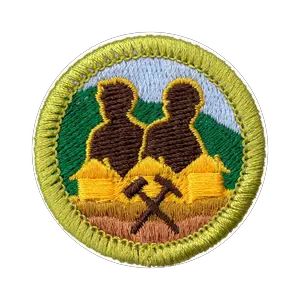
Scouts working on the Mining in Society merit badge explore different types of mining, such as surface and underground mining. They learn how miners stay safe and how mining companies protect the environment. They also find out how mining has changed over time with new technology.
Earning the Mining in Society merit badge helps Scouts understand career opportunities in the mining industry. They learn about jobs in engineering, safety, and equipment operation. Some Scouts may even meet professionals who work in mining and hear about their experiences.
This merit badge also teaches responsibility. Scouts learn how mining affects communities and why it is important to mine in a safe and responsible way. By completing the Mining in Society merit badge, Scouts gain a better understanding of how mining shapes the world around them.
Find specific helps for some of the Mining in Society merit badge requirements listed below. Some of these resources will just give the answers. Others will provide engaging ways for older Scouts to introduce these concepts to new Scouts.
Do the following:
When working on the Mining in Society merit badge, Scouts learn about minerals and how they are used in daily life. Minerals are natural substances found in the earth. They are used to make many products people use every day. Below are some minerals and examples of how they are used.
Scouts working on the Mining in Society merit badge will see that minerals are everywhere. Some minerals help build strong structures, while others are used in technology and medicine. Learning about minerals helps Scouts understand why mining is important in daily life.
When working on the Mining in Society merit badge, Scouts learn that mining and farming are closely connected. Many people think farming only depends on soil, water, and sunlight, but mining plays a big role in growing food. Farmers use minerals from the earth to improve soil, feed animals, and build equipment.
One of the biggest ways mining helps farming is through fertilizers. Fertilizers are materials added to soil to help plants grow. Important minerals like phosphorus, potassium, and nitrogen come from mined materials. Phosphorus is found in a mineral called phosphate rock, and potassium comes from potash. These minerals help crops grow faster and produce more food. Without mining, farmers would not have enough fertilizer to grow enough food for the world.
Mining also provides minerals for animal nutrition. Some livestock feed contains calcium, salt, and trace minerals like zinc and copper. These minerals, which come from mining, help animals stay healthy and strong.
Farming equipment also depends on mining. Tractors, plows, and irrigation systems are made from metals like iron, aluminum, and copper. Even glass for greenhouses comes from quartz, a mined mineral. Without mining, modern farms would not have the tools they need to plant and harvest crops efficiently.
The Mining in Society merit badge helps Scouts see how mining supports food production. Minerals from the earth help farmers grow healthy crops, raise strong animals, and use modern technology to produce more food. Understanding this connection helps Scouts appreciate how mining shapes everyday life.
When working on the Mining in Society merit badge, Scouts learn that minerals are found in different countries around the world. Some nations have large deposits of certain minerals, making them important suppliers. Here is where some common minerals are mined:
By working on the Mining in Society merit badge, Scouts see how minerals come from different parts of the world. A Mining in Society merit badge counselor can help explain why certain minerals are found in specific locations and how mining supports global trade. Understanding where minerals come from helps Scouts appreciate how mining shapes daily life.
Obtain a map of your state or region showing major cities, highways, rivers, and railroads. Mark the locations of five mining enterprises. Find out what resource is processed at each location, and identify the mine as a surface or underground operation. Discuss with your counselor how the resources mined at these locations are used.
When working on the Mining in Society merit badge, Scouts need to find mining operations in their state or region. This helps them understand how mining affects their local area and what resources are important nearby. A good way to start is by getting a map that shows major cities, highways, rivers, and railroads. This will help Scouts see where mines are located and how materials are transported.
Mining operations can be either surface mines or underground mines. A surface mine, also called an open-pit mine, removes minerals from the surface by digging large pits. An underground mine goes deep into the earth through tunnels to reach valuable materials. Each type of mine is used depending on how deep the minerals are located.
To complete this part of the Mining in Society merit badge, Scouts should find five mining sites in their state or region. Each site will focus on a specific mineral or material. For example, some common resources mined in different areas include:
After locating five mines, Scouts should find out how the resources are used. Some materials, like iron and copper, go to factories to make tools and machines. Others, like limestone and gravel, are used in roads and buildings. Discussing these uses with a Mining in Society merit badge counselor will help Scouts see how mining connects to everyday life.
By completing this part of the Mining in Society merit badge, Scouts gain a better understanding of how minerals are mined and transported. They also learn how mining supports industries and communities in their region.
Discuss with your counselor the potential hazards a miner may encounter at an active mine and the protective measures used by miners. In your discussion, explain how:
When working on the Mining in Society merit badge, Scouts learn that mining can be dangerous if safety rules are not followed. Miners work in tough conditions, and they must be aware of many hazards. Mining companies use training, equipment, and technology to keep workers safe.
One major hazard is cave-ins or collapses, which can happen in underground mines if tunnels are not properly supported. Miners use strong support beams and metal bolts to keep the walls and ceilings stable. In surface mines, landslides can occur if the ground shifts suddenly.
Toxic gases and poor air quality are also dangers in underground mines. Some mines contain gases like methane or carbon monoxide, which can be deadly if not detected. Miners carry personal air monitors, and ventilation systems keep fresh air flowing. In case of emergency, miners have self-rescue devices that provide oxygen.
Heavy machinery accidents are another risk. Large trucks, drills, and conveyor belts are used in mining, and workers must stay alert to avoid getting too close. High-visibility vests and helmets help miners be seen in dark or dusty conditions.
Explosives are used to break apart rock in some mining operations. Only trained professionals handle explosives, and strict safety rules are followed to prevent accidents. Miners must stay at a safe distance and use protective gear.
Noise, dust, and vibrations are constant in a mine. Miners wear ear protection to prevent hearing damage and dust masks to avoid breathing in harmful particles. Some machines cause strong vibrations, which can lead to injuries if workers are not careful.
The Mining in Society merit badge teaches Scouts that while mining has risks, careful planning and safety measures help protect workers. By learning about these hazards, Scouts can better understand the challenges miners face and the importance of workplace safety.
When working on the Mining in Society merit badge, Scouts learn that miners wear special protective equipment to stay safe. Mining can be dangerous, so workers must use gear designed to prevent injuries and protect them from hazards like falling objects, dust, noise, and toxic gases.
The Mining in Society merit badge helps Scouts understand the importance of safety in mining. Wearing the right protective equipment can mean the difference between life and death in a dangerous environment. Miners rely on these safety tools every day to do their jobs while staying protected.
When working on the Mining in Society merit badge, Scouts learn that miners must protect their hands and feet from many dangers. Mines have heavy equipment, sharp tools, and uneven ground, so proper safety gear is needed to prevent injuries.
Miners wear special gloves to protect their hands. These gloves help prevent cuts, burns, and injuries from heavy objects. Some gloves are made to reduce vibration from drills and other equipment, which helps prevent long-term damage to a miner’s hands. Gloves also protect against chemicals, heat, and cold, depending on the type of mine.
For foot protection, miners wear sturdy boots with steel or composite toe caps. These boots protect against falling rocks and heavy equipment. The soles of the boots are designed to prevent slipping on wet or uneven surfaces. Some mining boots also have extra ankle support to reduce the risk of twisting or spraining an ankle.
Tripping and falling are serious risks in a mine. The ground can be rocky, muddy, or covered in debris. Miners must watch where they step and wear proper footwear to reduce the risk of slipping. Many mines also use bright lighting and warning signs to help workers avoid dangerous areas.
The Mining in Society merit badge teaches Scouts why safety is important in mining. By wearing the right gloves and boots, miners can prevent serious injuries and work safely in tough conditions. Understanding these risks helps Scouts see the challenges of working underground or at a mining site.
When working on the Mining in Society merit badge, Scouts learn that mining companies use technology to keep workers safe. Mines can be dangerous, so special monitoring equipment is used to warn miners of possible hazards. Robots, drones, and other advanced tools also help in emergencies.
One important safety system is gas detection monitors. Some underground mines have harmful gases like methane or carbon monoxide. These gases are invisible and can be deadly if not detected. Miners carry personal gas detectors, and large monitoring systems check air quality throughout the mine. If dangerous gases are found, alarms go off to warn miners to leave the area.
Seismic sensors are another safety tool. These devices detect ground movement and can warn miners about possible cave-ins or collapses. Some mines also use temperature and moisture sensors to check for unsafe conditions. These monitoring systems help prevent accidents before they happen.
In emergencies, robots and drones can help with rescues. Robots are used to enter dangerous areas where it is too risky for humans. They can check for survivors, deliver supplies, or clear debris. Drones, which are small flying machines, can be sent into mines to look for missing workers or assess damage. Both of these technologies make rescues safer and faster.
The Mining in Society merit badge helps Scouts understand how modern technology is making mining safer. By using monitoring equipment, robots, and drones, miners can reduce risks and respond to emergencies more effectively. Learning about these tools shows how science and engineering help protect workers in one of the world’s toughest jobs.
Discuss with your counselor the dangers someone might encounter at an abandoned mine or quarry.
When working on the Mining in Society merit badge, Scouts learn that abandoned mines and quarries can be extremely dangerous. These sites may seem like interesting places to explore, but they are full of hidden hazards that can cause serious injury or even death.
One major danger is unstable ground. Old tunnels and mine shafts can collapse without warning. The walls and ceilings of abandoned mines may look solid, but years of weather and erosion can weaken them. A person walking into an old mine could fall into a hidden shaft or be trapped by falling rocks.
Flooded quarries and mines are also hazardous. The water may look calm and inviting, but it is often very deep, cold, and filled with hidden debris. Sudden drops in depth and strong currents can make swimming deadly. Many people have drowned in abandoned quarries because they underestimated the risks.
Toxic gases and lack of oxygen are another danger in abandoned mines. Some mines still release dangerous gases like carbon monoxide or methane, which can cause suffocation. Old mines may also have rusting machinery, unstable ladders, and sharp metal objects that can cause serious injuries.
The Mining in Society merit badge helps Scouts understand why abandoned mines should never be entered. Many mining areas have warning signs and fences to keep people out, but not all dangerous sites are clearly marked. The best way to stay safe is to respect these areas and never explore them. Learning about these risks helps Scouts make smart decisions and educate others about mine safety.
Do ONE of the following:
* Visiting a mine site, a mining equipment manufacturer, or an equipment supplier requires advance planning. These sites can be potentially dangerous. You will need permission from your parent and counselor, and the manager of the mine site, or equipment manufacturer or supplier. While there, you will be required to follow closely the site manager’s instructions and comply with all safety rules and procedures, including wearing appropriate clothing, footwear, and personal safety equipment.
When working on the Mining in Society merit badge, Scouts have the opportunity to take a virtual tour of two different types of mines. This is a great way to learn about mining without having to visit a site in person. Virtual tours show how mines operate, what minerals they produce, and how workers stay safe.
To complete this requirement, Scouts should first find two different types of mines to explore online. One could be a surface mine, such as an open-pit or strip mine. The other could be an underground mine, where minerals are extracted from deep below the earth’s surface. Watching videos or using interactive mine tours can help Scouts compare these different mining methods.
While exploring, Scouts should pay attention to several key topics. Resource exploration is how companies find and study mineral deposits before mining begins. Mine planning and permitting involves getting approval to operate a mine while following safety and environmental rules. Equipment used in each type of mine is also important to note—surface mines use giant trucks and shovels, while underground mines use tunnels, elevators, and drilling machines.
Scouts should also focus on the minerals produced at each mine. Some mines produce metals like copper, gold, or iron, while others extract materials like coal, salt, or limestone. The type of mineral determines how the mine operates and what methods are used to remove and process the material.
The Mining in Society merit badge helps Scouts understand how different types of mines work. After taking virtual tours, Scouts should discuss what they learned with their Mining in Society merit badge counselor. Talking about the similarities and differences between mines will give them a better understanding of how mining supports everyday life.
When working on the Mining in Society merit badge, Scouts can visit a mining or minerals exhibit at a museum. This is a great way to see real mineral samples, learn about mining history, and understand how minerals have shaped the world. Before visiting, Scouts should check with their parent or guardian and get approval from their Mining in Society merit badge counselor.
At the museum, Scouts should find out about the history of the exhibit. Some exhibits focus on local mining history, showing how mining has impacted nearby communities. Others highlight specific types of mining, such as gold, coal, or gemstone mining. Reading the display signs and asking museum staff questions can help Scouts learn more.
One part of this requirement is identifying three ways minerals have influenced history. For example, the Gold Rush in the 1800s led to major population growth in places like California and Alaska. Coal mining powered the Industrial Revolution, helping factories and railroads expand. Iron and steel mining made it possible to build large bridges, skyscrapers, and modern transportation systems.
Scouts should take notes during their visit and think about how mining has changed over time. Discussing what they learned with their Mining in Society merit badge counselor will help them complete the Mining in Society merit badge. Understanding mining history helps Scouts see how minerals continue to play an important role in everyday life.
When working on the Mining in Society merit badge, Scouts may have the chance to visit an active mine. This is a unique opportunity to see mining operations up close and learn how minerals are taken from the earth. Before planning a visit, Scouts need permission from a parent or guardian and approval from their Mining in Society merit badge counselor. They should also contact the mine in advance to arrange the visit and learn about any safety rules.
At the mine, Scouts should observe the different stages of mining. Exploration is the first step, where geologists study rock samples and use special tools to find valuable minerals. Planning and permitting comes next, as companies must follow government rules to make sure mining is safe and environmentally responsible.
Once a mine is approved, workers use equipment like drills, shovels, and trucks to remove the resource. Some mines use surface mining, where large pits are dug, while others use underground mining, with tunnels and elevators. After the material is mined, it goes through processing, which separates the useful minerals from unwanted rock. This can involve crushing, chemical treatments, or melting metals into pure form.
Scouts should take notes, ask questions, and collect brochures if available. If photography is allowed, pictures of mining equipment, safety gear, or processing facilities can help with discussions later. Sharing what they learned with their Mining in Society merit badge counselor will help them complete the Mining in Society merit badge. Visiting a mine gives Scouts a better understanding of the hard work and technology behind the minerals used in everyday life.
When working on the Mining in Society merit badge, Scouts can visit a mining equipment manufacturer or supplier. This visit helps Scouts understand the machines used in different parts of the mining process. Before planning a trip, Scouts need permission from a parent or guardian and approval from their Mining in Society merit badge counselor. They should also contact the company in advance to arrange the visit and learn about safety rules.
At the facility, Scouts should learn about the different types of mining equipment and their uses. Drills and blasting equipment are used at the start of the mining process to break apart rock and reach minerals. Excavators and haul trucks move large amounts of earth in surface mining operations. In underground mines, tunnel boring machines and elevators help miners access deep mineral deposits.
Other equipment focuses on processing minerals after they are mined. Crushers and grinders break down large rocks into smaller pieces, making it easier to separate valuable materials. Conveyor belts and sorting machines help transport and organize mined materials. Some companies also make safety equipment, such as ventilation systems for underground mines and personal protective gear for workers.
Scouts should take notes, ask questions, and collect brochures if available. If photography is allowed, pictures of different machines can help with discussions later. Sharing what they learned with their Mining in Society merit badge counselor will help them complete the Mining in Society merit badge. Visiting a mining equipment manufacturer or supplier shows Scouts how technology and engineering play a big role in modern mining.
When working on the Mining in Society merit badge, Scouts learn that mined rock must be broken down before minerals can be used. Large chunks of rock contain valuable materials, but they need to be crushed, ground, or treated to separate the minerals from unwanted material. There are several methods used to reduce rock in size and extract minerals.
One common method is crushing and grinding. Large machines called crushers break big rocks into smaller pieces. Then, grinders or mills reduce them to fine powder. This makes it easier to separate valuable minerals from the rest of the rock.
Another method is flotation, which uses water and chemicals to separate minerals. Crushed rock is mixed with water and special chemicals in large tanks. Air bubbles attach to valuable minerals, making them float to the top, where they can be collected. This method is often used for copper, lead, and zinc.
A chemical process called leaching is also used to extract minerals. One common type is cyanide leaching, which is used to extract gold from crushed rock. A cyanide solution dissolves the gold, which is then recovered from the liquid. Another example is acid leaching, used to extract uranium and copper.
Scouts working on the Mining in Society merit badge also learn about smelting and refining. Smelting is a process that heats ore to very high temperatures to separate metals from impurities. For example, iron ore is heated with carbon to produce pure iron. Refining is the next step, which removes any remaining impurities to produce high-quality metal.
Understanding these processes helps Scouts see how raw materials from the earth become useful products. Discussing these methods with a Mining in Society merit badge counselor will give a better understanding of the science behind mining and metal production.
When working on the Mining in Society merit badge, Scouts explore the history of a local mine to understand how mining has shaped their community. Every mine has a unique story, from how the mineral deposit was discovered to the impact it had on the local economy and culture.
To begin, Scouts should research what was or is still mined in their area. Some common materials include coal, iron, copper, gold, limestone, or salt. The deposit may have been found through surface exploration, drilling, or by early settlers noticing mineral-rich rocks in the area. Learning how miners extracted the resource can also be interesting. Some mines used underground tunnels, while others used open-pit mining to remove large amounts of material from the surface.
Scouts should also find out how the mined resource was used. Some materials, like coal or iron, were used in industry and construction. Others, like gold and silver, became valuable for trade and jewelry. If the mine is no longer active, they can research why it closed—was the resource depleted, or did the industry change?
Talking to a historian, community leader, or business person can help Scouts learn how mining affected the local area. Mining often brings jobs and economic growth, but it can also change the environment or impact nearby towns. Some communities were built around mining, with workers and families depending on the industry. Others had to deal with challenges like pollution or land reclamation after mines closed.
The Mining in Society merit badge helps Scouts see how mining connects to history, economics, and daily life. Understanding the story of a local mine gives valuable insight into how natural resources shape communities and industries. Discussing these findings with a Mining in Society merit badge counselor will help Scouts see the lasting effects of mining in their area.
Do the following:
When working on the Mining in Society merit badge, Scouts learn that mining can affect the environment, but modern mines use many methods to reduce harm. Mining companies must follow strict rules to protect land, water, and wildlife while still providing important resources.
One major focus is reducing waste and pollution. Many mines use water treatment systems to prevent chemicals or heavy metals from polluting nearby rivers and lakes. Some operations recycle water to reduce how much fresh water they use. Dust control measures, like spraying water on roads and rock piles, help keep air quality safe for workers and nearby communities.
Mining companies also work to restore land after mining is finished. This process, called reclamation, involves replacing topsoil, planting trees, and making sure the land can support wildlife and plants again. Some former mines have even been turned into parks, forests, or lakes for public use.
Energy use is another area of improvement. Many mines are switching to electric or hybrid equipment instead of diesel-powered machines. Some companies are also using renewable energy, like solar or wind power, to run parts of their operations. This helps reduce the carbon footprint of mining.
The Mining in Society merit badge teaches Scouts that mining and sustainability can work together. By using better technology, reducing pollution, and restoring land, modern mines are finding ways to provide important materials while protecting the environment. Understanding these efforts helps Scouts see how mining continues to improve its impact on the planet.

When working on the Mining in Society merit badge, Scouts learn that mining changes the land, but responsible companies work to restore it through a process called reclamation. Reclamation is the process of returning mined land to a natural or usable state after mining is complete. This helps protect wildlife, water sources, and local communities.
Mine reclamation involves several steps. First, mining companies replace the topsoil that was removed. Then, they plant grass, trees, and other vegetation to help prevent erosion and support wildlife. In some cases, former mining areas are turned into parks, forests, or lakes. Companies may also fill in old pits or tunnels to make the land safe for future use.
Reclamation follows the same ideas as the Leave No Trace Seven Principles and the Outdoor Code. The Leave No Trace principle of respecting the environment means that after mining is done, the land should be restored rather than left damaged. The principle of leaving what you find reminds us that nature should be protected for future generations. The Outdoor Code encourages Scouts to be conservation-minded, which means taking care of the land and using resources wisely.
The Mining in Society merit badge helps Scouts understand that mining and environmental responsibility go hand in hand. By following good reclamation practices, mining companies show that they care about nature and work to leave the land better than they found it. Learning about reclamation helps Scouts see how industries can balance resource use with protecting the environment.
When working on the Mining in Society merit badge, Scouts learn that society values restoring land after mining. People want mined areas to be safe, useful, and beneficial to both wildlife and communities. This is why many mining companies work on reclamation to return the land to a natural or productive state once mining ends.
Reclaimed land can serve different purposes. Some areas become parks, forests, or wetlands, providing homes for wildlife. Others are used for farming, recreation, or new businesses. Society expects mining companies to take responsibility for the land and make sure it can be used again in a way that benefits people and nature.
One great example of land transformation is the Summit Bechtel Family National Scout Reserve in West Virginia. This area was once a mine site, but after mining ended, it was restored and turned into a world-class outdoor adventure center for Scouting America. Today, it hosts national Scout events, provides hiking and biking trails, and protects local wildlife. This shows how reclaimed land can be given a new purpose that benefits future generations.
The Mining in Society merit badge helps Scouts understand why land restoration is important. Returning mined areas to a healthy and usable state helps protect the environment while creating new opportunities for people. Discussing these ideas with a Mining in Society merit badge counselor will help Scouts see how responsible mining and land stewardship go together.
Do ONE of the following:
When working on the Mining in Society merit badge, Scouts learn that mining is not just limited to Earth. Scientists and private companies are exploring ways to mine the moon, Mars, and near-Earth asteroids. Interplanetary mining could provide valuable materials for space exploration and even help with shortages of certain minerals on Earth.
One of the main reasons for space mining is to find resources that could support human life in space. The moon has large amounts of ice, which can be turned into water for astronauts and even split into hydrogen and oxygen for rocket fuel. Asteroids may contain metals like iron, nickel, and platinum, which could be used to build spacecraft and space stations. By mining in space, scientists hope to reduce the need to launch heavy materials from Earth, which is expensive and difficult.
Mining in space is very different from mining on Earth. There is little to no gravity, which makes drilling and collecting materials challenging. Robots and automated machines will likely do most of the work. Since there is no air or water in space, scientists must develop new ways to process and refine materials without using traditional Earth-based methods.
There are also major challenges in space mining. Spacecraft must travel long distances to reach asteroids or other planets, and bringing mined materials back to Earth is costly. Scientists must also figure out how to collect and analyze samples in harsh conditions, where extreme temperatures and radiation can damage equipment.
The Mining in Society merit badge helps Scouts explore how technology and innovation could make interplanetary mining possible. Understanding space mining shows how humans are preparing for the future of exploration and resource use beyond Earth. Discussing these ideas with a Mining in Society merit badge counselor will give Scouts a better view of how mining could play a role in space missions.
When working on the Mining in Society merit badge, Scouts learn that minerals are not only found on land but also in seawater and on the ocean floor. The ocean holds valuable resources that could be used for technology, construction, and industry. However, ocean mining comes with unique challenges and environmental concerns.
Several important minerals are found dissolved in seawater, including magnesium, bromine, and lithium. The ocean floor also contains valuable materials such as manganese, nickel, cobalt, and rare earth elements, which are used in electronics and batteries. Some of these minerals are found in polymetallic nodules, which are small rock-like deposits scattered across the deep-sea floor. Others are located near underwater volcanic vents, where hot water deposits minerals over time.
Ocean mining takes place in different parts of the world. Some of the main areas being explored include the Clarion-Clipperton Zone in the Pacific Ocean, where companies study ways to collect polymetallic nodules. Offshore mining for sand, gravel, and diamonds is already happening in places like Namibia and off the coast of Australia.
There are strong incentives for ocean mining, including the growing demand for rare metals used in batteries, clean energy, and electronics. However, mining the ocean comes with sustainability challenges. Deep-sea ecosystems are delicate, and disturbing the ocean floor can harm marine life. Plumes of sediment stirred up by mining could spread over large areas, affecting underwater habitats. Scientists and mining companies must develop ways to minimize damage and restore the ocean environment after mining, a process known as reclamation.
The Mining in Society merit badge helps Scouts explore both the benefits and risks of ocean mining. Understanding how minerals are collected from the sea and the challenges of protecting marine life will help Scouts see how mining must balance resource use with environmental responsibility. Discussing these issues with a Mining in Society merit badge counselor will provide insight into the future of ocean resource management.
When working on the Mining in Society merit badge, Scouts learn that many metals and minerals can be recycled instead of being thrown away. Recycling helps reduce the need for new mining, conserves natural resources, and lowers environmental impact.
Several important metals are commonly recycled. Aluminum from soda cans, car parts, and foil can be melted down and reused many times. Steel, found in cars, buildings, and appliances, is one of the most recycled materials in the world. Copper from electrical wiring and plumbing can also be reused without losing its quality.
Other recyclable metals include gold and silver from old electronics, nickel from batteries, and lead from car batteries. Zinc, used in galvanized steel and coins, can be recovered and reused. Platinum, found in catalytic converters and medical equipment, is also valuable for recycling.
Nonmetals can also be recycled. Glass, made from quartz, can be crushed and melted to create new bottles and windows. Gypsum, used in drywall, can be recovered from construction waste and used again. Rubber from old tires can be turned into playground surfaces or road materials. Even some types of plastic contain minerals like titanium dioxide, which can be extracted and reused.
Recycling reduces the demand for new mining by keeping valuable materials in use. This makes mining more sustainable because fewer raw materials need to be taken from the earth. It also saves energy, as recycling metals like aluminum and copper uses much less energy than producing new metal from ore.
The Mining in Society merit badge helps Scouts understand how recycling and mining are connected. While mining is necessary to provide essential materials, recycling helps extend the life of those resources. Talking with a Mining in Society merit badge counselor about how recycling supports sustainability can help Scouts see the bigger picture of responsible resource management.
When working on the Mining in Society merit badge, Scouts learn that minerals and metals have changing prices based on supply and demand. Prices for materials like gold, copper, aluminum, cement, and coal go up and down due to factors such as mining production, global events, and industry needs. By researching these prices and their five-year trends, Scouts can better understand how mining affects the economy.
To complete this requirement, Scouts should use the internet or other resources to find the current price of a chosen material. Websites that track commodity prices, such as financial news sources or government mining reports, can provide updated information. Some materials, like gold and copper, are traded on global markets, meaning their prices change daily. Others, like cement and coal, are affected by regional supply and demand.
After finding the current price, Scouts should look at how that price has changed over the past five years. Did the price increase or decrease? What events may have influenced the trend? For example, gold prices often rise during times of economic uncertainty because people see gold as a safe investment. Copper prices may go up when there is high demand for construction and electronics.
The Mining in Society merit badge helps Scouts understand that mining is connected to the global economy. By tracking price trends, Scouts can see how mining businesses and consumers react to changes in supply, demand, and world events. Discussing these findings with a Mining in Society merit badge counselor will help Scouts understand the financial side of mining and resource management.
Do ONE of the following:
When working on the Mining in Society merit badge, Scouts learn that mining is more than just digging for minerals. The industry offers many careers in science, engineering, safety, and environmental protection. Here are some careers Scouts might explore:
The Mining in Society merit badge helps Scouts see that mining careers go beyond working underground. Whether interested in science, engineering, machinery, or environmental work, there are many job opportunities in the mining industry.

Scouts BSA offers over 100 merit badges that allow Scouts to explore various subjects, including sports, crafts, science, trades, business, and potential careers. Earning these badges helps Scouts discover their interests and develop valuable skills. Notably, any Scout can pursue any merit badge at any time; there is no need to wait for rank advancement to begin.
The merit badge program includes topics like outdoor skills, science and nature, health and safety, trades, and more. For example, the Mining in Society merit badge introduces Scouts to the mining industry’s role in society, covering aspects such as mineral resources, mining processes, and related careers. By engaging with badges like the Mining in Society merit badge, Scouts gain a broader understanding of the world and the various fields they might be interested in exploring further.

Scouts BSA, formerly known as Boy Scouts, is a program of the Boy Scouts of America for youth aged 11 through 17. It aims to prepare young people to make ethical and moral choices over their lifetimes by instilling in them the values of the Scout Oath and Law. The program offers a unique mix of adventure, leadership development, and service to others, fostering a sense of community and personal growth.
Members participate in a wide range of outdoor activities, such as camping, hiking, and backpacking, which are integral to the program’s emphasis on character development, citizenship, and physical fitness. Scouts BSA is structured around a patrol system, promoting teamwork and leadership through peer-led activities and decision-making processes. Through advancement opportunities, Scouts are encouraged to learn various skills, earn merit badges, and progress through ranks, culminating in the prestigious Eagle Scout rank.
For example, the Mining in Society merit badge introduces Scouts to the mining industry’s role in society, covering aspects such as mineral resources, mining processes, and related careers. By engaging with badges like the Mining in Society merit badge, Scouts gain a broader understanding of the world and the various fields they might be interested in exploring further.
What do Scouts learn from the Mining in Society merit badge?
Scouts learn how mining provides important materials for everyday life. They explore different types of mining and how miners work safely. They also learn about careers in mining and how the industry protects the environment.
Why is mining important?
Mining provides materials needed for things like cars, buildings, and electronics. Many everyday items come from minerals that are mined from the earth. Without mining, people would not have many of the products they use every day.
Do Scouts have to visit a mine to earn the Mining in Society merit badge?
No, visiting a mine is just one option. Scouts can also take virtual mine tours, visit a museum exhibit, or learn about mining history in their community. There are different ways to complete the requirements.
What kinds of careers are in mining?
Mining offers jobs in engineering, safety, equipment operation, and environmental protection. Some people work deep underground, while others work in labs or offices. The Mining in Society merit badge helps Scouts learn about these careers.
Is mining dangerous?
Mining can be dangerous, but miners use special equipment and training to stay safe. The Mining in Society merit badge teaches Scouts about safety gear, warning systems, and how technology helps protect miners.
How does mining affect the environment?
Mining can change the land, but companies work to reduce harm. They use special methods to control pollution and restore land after mining is done. Scouts learn about these efforts when working on the Mining in Society merit badge.
Does mining happen in the ocean or in space?
Yes, people mine minerals from the ocean floor, and scientists are studying how to mine in space. The Mining in Society merit badge includes learning about ocean mining and interplanetary mining.
Can minerals be recycled?
Yes, metals like aluminum, copper, and steel can be recycled. Recycling helps save natural resources. Scouts who earn the Mining in Society merit badge learn how recycling is connected to mining.
How can Scouts get started on the Mining in Society merit badge?
Scouts should first find a Mining in Society merit badge counselor. Then, they can read the requirements and start researching minerals, mining safety, and careers. Talking to a Mining in Society merit badge counselor will help them plan how to complete the badge.
The Mining in Society merit badge helps Scouts discover how important mining is to daily life. Many things people use, like phones, cars, and buildings, come from mined materials. Scouts learn about different types of mining and how minerals are turned into useful products.
Safety is a big part of the Mining in Society merit badge. Scouts find out how miners stay safe using special gear and technology. They also learn about the dangers of abandoned mines and how mining companies protect the environment.
This merit badge also introduces Scouts to careers in mining. They explore jobs like engineers, equipment operators, and safety inspectors. Some Scouts may even visit a mine, take a virtual tour, or talk to someone who works in the industry.
Scouts also learn about mining in space and the ocean. They explore how people find and collect minerals in new ways. By earning the Mining in Society merit badge, Scouts gain a better understanding of the role mining plays in the world around them.
JL VETERAN 37 MALANG